

Thermal Solutions for University Research
TUTCO Supports the Thermal Needs Behind University Research and Engineering
Universities are working at the forefront of some of today’s most advanced technologies. Aerospace and propulsion. Hydrogen and fuel cells. Battery systems. Semiconductors. Advanced materials. Additive manufacturing. Alternative energy. The research may be very different, but many of these projects have something in common: they need heat.
That need can take many forms. Researchers may need to heat air or process gases to a precise temperature. They may need to reach extremely high temperatures in a controlled process stream. A test stand might require accurate, repeatable temperature control, or a piece of laboratory equipment may need heating technology capable of meeting very specific airflow, pressure, space, and performance requirements.
Through the combined capabilities of TUTCO Farnam and TUTCO SureHeat, researchers and engineering teams have access to a broad range of electric heating technologies for laboratory equipment, test stands, pilot systems, prototypes, and other research applications.
Heating Technology for a Wide Range of Research
The thermal requirements of university research can vary dramatically from one project to the next. In aerospace and propulsion research, precise heating of air, inert gases, and process streams can play an important role in wind tunnel testing, propulsion research, environmental simulation, materials evaluation, and component testing. Hydrogen and fuel cell researchers may require controlled gas heating for fuel cell development, hydrogen production, ammonia cracking, and related energy technologies. Battery and energy storage programs rely on carefully managed temperatures during charging, discharging, environmental testing, and thermal management studies.
Advanced materials research presents another set of thermal requirements. Controlled heating can be essential when studying material properties, phase changes, curing processes, and high-temperature performance. Semiconductor and electronics researchers may require precise temperatures for wafer processing, drying, component testing, and environmental simulation. The applications continue into additive manufacturing, chemical and process engineering, alternative energy, cryogenic research, environmental test chambers, scientific instrumentation, and specialized laboratory equipment.
From Precise Control to Extreme Temperatures
Some research applications can be served by an established heating product. Others push the boundaries of temperature, airflow, pressure, size, or control. TUTCO offers heating technologies capable of addressing both. TUTCO Farnam provides process air heaters, flexible heaters, and engineered heating systems for a wide variety of research and laboratory requirements. TUTCO SureHeat adds high-performance inline air and gas heating technologies for applications requiring precise, responsive heating at elevated temperatures.
Together, these capabilities give researchers more options for matching the heating technology to the application rather than designing their research around the limitations of the heater. And when a standard product isn't the right fit, TUTCO engineers can work with research and engineering teams to understand the application's operating requirements and determine an appropriate heating approach.
Universities are pushing research in new directions every day. When that work requires heat, TUTCO has the technologies and engineering expertise to help provide it.
ASK IAN
Maximizing Heat Transfer from your Heater
by Ian Renwick

Getting the heat away from your heater is one of the best things you can do to prolong its life. Be it conductive or convective heat transfer, maximizing the right one in an application is something important to consider.
Starting with cartridge heaters, they’re designed to operate in the world of conductive heat transfer.
By far, that method of getting heat away from a heater (vs. convection or radiation) is the best and keeps your heater the coolest. That word “coolest” is a relative term. The heater might be cooking along at 600°F, but it’s considerably cooler than a heater operating in the same application at 800°F. It’s obvious which will last longer.
So how do you achieve this?How do you maximize your conductive heat transfer?
First, start with fit. Ideally, you would want a press fit or a transition fit between the heater and the hole it’s going into. Both require some amount of force to get a cartridge heater into a hole, and that’s really the ideal situation. Unfortunately, it’s not very practical. Heaters need to be replaced eventually, and removing a press-fit heater could be impossible without machining it out. Not the ideal situation.
The same applies to the transition fit. It’s also quite tricky to get those types of fits every time. The tolerance of heater diameter is ±0.002” across the industry, so each hole would need to be individually machined in order to get the fit just right.
Let’s find something a bit more practical. We actually make our cartridge heaters 0.005” smaller than the hole they’re intended to fit into. For example, a 1/2" diameter heater is actually swaged to a final diameter of 0.495” ±0.002” so it’ll fit into a 1/2" hole. Sure, we could build the heater to a final nominal diameter of 0.500”, but that would require placing it into a hole measuring 0.505” or so. It’s much more difficult for a hole to be drilled and reamed to that uncommon diameter rather than to the very common 0.500”. We (the entire industry) do everyone a favor by making heaters slightly undersized.
What about that air gap that exists between the heater and the inside of the hole?
Yes, there are a couple of thousandths of an inch of air space around the heater, and that does not lend itself to good conductive heat transfer. That is addressed in a few ways. First, when the heater gets hot enough, it will expand (due to thermal expansion) to fill the space and eliminate the air around the heater. There’s also the oxidation of the heater sheath that will occur. That will cause the outside diameter of the heater to enlarge slightly, better fitting its hole.
If you want to completely eliminate the space between the heater and hole, you can use a heat transfer compound.
Put a thin layer on the heater before you insert it into the hole. All the space will be taken up by the transfer compound, and you’ll get much better conductive heat transfer. Good materials to use are a few layers of milk of magnesia (yes, the stuff you can buy at a pharmacy) or some boron nitride spray (available from McMaster).
Other thermal transfer compounds can be used as long as it’s done carefully. Many of them contain copper, lithium, or some other conductive component. Just make sure you keep it away from the leadwires of the heater, or you might have electrical shorting issues. Not good.
When it comes to band heaters, conduction is king there too.
You want a good, tight fit around the barrel you’re heating. Don’t let the heater twist when you’re installing it. Good contact is important all the way around. Be sure the barrel you’re heating is clean and smooth. Any bumps or pits allow for pockets of air underneath the heater, and that’s bad. Even a small weld splash from an assembly process can cause a big pocket under the heater and lead to short heater life.
Again, as with cartridge heaters, thermal transfer compounds can be used to help with heat transfer. Be just as cautious as was discussed with the cartridge heater. You might not want to go with milk of magnesia because that’ll take a while to apply, but boron nitride spray is always a good option.
There’s another issue with band heaters that affects conduction, and that’s the opposite of what happens with cartridge heaters.
It’s a good thing when a cartridge heater expands because it helps fill the space of the hole it’s in. For a band heater, thermal expansion means that the heater gets longer (increases its circumference) and becomes loose. A loose band heater is never good.
There are a few things to do about this. The first is to retighten the heater when it’s at temperature. That can be a bit tricky sometimes due to an application’s geometry, but a hot, loose heater really should be rectified as quickly as possible. Retightening several times may be required.
The safest way to do it is to kill the power to the heater, get the heater as tight as possible, and then re-energize the heater. Again, that’s the safe way to do it, but you still need to be careful about not burning yourself.
Another option is to try spring-bolt clamping. That’s a clamping method where there’s a spring built into the clamping (as the name says), and the idea is that the spring applies force to the clamping as the heater elongates due to thermal expansion. It does indeed work, but it’s not perfect. It does keep a certain amount of tightness on the heater clamping, but you can always tighten the heater a little bit more by hand. Spring-bolt clamping is an aid to eliminating the looseness of enlarged bands from thermal expansion, but it doesn’t completely eliminate the problem. Just keep that in mind.
With strip heaters, they’re rather straightforward, but you’ve got to watch out for buckling.
If a strip heater is clamped tightly at both ends, it’ll elongate when hot, and that extra length has to go somewhere, meaning it’ll buckle and pull away from the surface you’re intending to heat. It’s advisable to clamp one end of the heater firmly in place and give the other end enough room to move. You’ll notice that we use oblong holes in our strip heaters to allow for this movement.
Keep in mind, thermal elongation always wins. You can never clamp something well enough to combat thermal elongation. A hot heater will always buckle or deform a setup in some other way.
Hold-down clamps along the length of a strip heater aren’t a bad idea if the application will allow for it. I wouldn’t affix the clamps to the heater, but set them in place tightly, allowing the heater to slide underneath as it expands and contracts during temperature changes. For poor contact issues, boron nitride is always a good filler material to use.
When it comes to tubular heaters, it’s a bit of a mixed bag.
Any product that uses a tubular heater inside it, like a Permaheat band or strap, or an Ultima band or strip, should follow the same thinking as above, where conduction is king. Bare tubular heaters that are formed to shape are often hammered into manifolds that they need to heat. No complaints there.
For air applications, you’ve got to be a bit more careful. Conduction is no longer an option, so maximizing convection is the way to keep heater temperature down and prolong heater life. If a formed tubular will be in an airflow, make sure the flow is over all heated sections of the element. If you have spots of poor airflow, you’ll see those sections of the tubular element overheat, indicated by excessive discoloration on the sheath.
If you have a tubular heater with fins on it, make sure the airflow across the heater is perpendicular to those fins. Any non-perpendicularity will lead to dead spots of poor or no airflow right next to the heater body. Not good.
The basic principle is simple: get the heat away from the heater as efficiently as possible.
For cartridge, band, and strip heaters, that usually means maximizing conductive contact. For tubular heaters used in air applications, it means maximizing airflow and convection. In general, keeping the heater operating temperature under control is one of the best ways to extend heater life.
ENGINEERING INSIGHT
A Better Approach to Wide, Plastic Seals
Successful thermal design often depends on selecting the right heating technology
by AJ Nidek
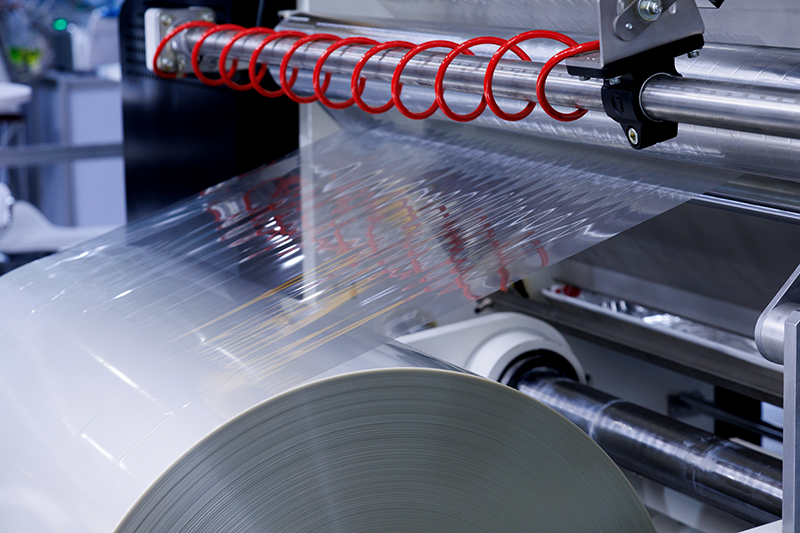
In manufacturing, the obvious solution isn't always the right one. That was the case when a packaging equipment manufacturer approached TUTCO Farnam with a unique sealing challenge. The company was producing equipment that created a side seal between two layers of plastic film. While this type of process commonly relies on cartridge heaters, their application required something different. Instead of the narrow seal typically found on packaging equipment, they needed to produce a seal approximately one inch wide across a sealing bar nearly 30 inches long. Achieving that wider, perfectly consistent seal proved to be more difficult than expected.
The customer's first approach followed a familiar path. They installed a cartridge heater inside a wider metal sealing bar, hoping the additional metal would spread the heat evenly across the entire sealing surface. While the concept seemed sound, the results were disappointing. The center of the sealing bar became significantly hotter than the outer edges because the heat was still concentrated around the cartridge heater itself. As the heat traveled outward through the metal, temperature dropped off, making it difficult to achieve a uniform seal across the full one-inch width. To make matters worse, the larger mass of metal dramatically increased the amount of time required for the machine to reach operating temperature. Operators were left waiting while the sealing bar slowly absorbed enough heat to begin production.
Rather than trying to improve the existing design, the engineering team at TUTCO Farnam stepped back and looked at the problem from a different perspective. Instead of asking how to spread heat from a single source, they focused on creating a heating element that matched the size and shape of the sealing surface itself. The solution was a custom mica surface heater measuring approximately 30 inches long by one inch wide. Rather than being buried inside a large block of metal, the heater was sandwiched between two machined metal plates and mechanically fastened into place, allowing heat to be generated evenly across the entire sealing area.
The difference was immediately noticeable. Because the heating element extended across the full width of the seal, the temperature remained remarkably consistent from edge to edge. The customer was able to produce the uniform one-inch seal they had originally envisioned without the hot spots and cooler edges that had plagued the cartridge heater design. Equally important, the new heater dramatically reduced warm-up time. By generating heat directly across the sealing surface instead of relying on a large piece of metal to distribute it, the machine reached operating temperature in less than half the time required by the original design. Faster startups meant less waiting for operators and improved overall production efficiency.
One of the biggest takeaways from this project is that successful thermal design often depends on selecting the right heating technology rather than simply increasing heater size or power. Cartridge heaters remain an outstanding solution for countless applications, particularly when concentrated internal heating is required. However, applications that demand broad, uniform surface temperatures sometimes benefit from an entirely different approach. In this case, the custom mica surface heater delivered exactly what the customer needed because it applied heat where it mattered most—directly across the entire sealing surface.
Projects like this illustrate why many OEM manufacturers involve TUTCO Farnam early in the design process. Every application presents its own combination of thermal requirements, space limitations, production goals, and performance expectations. By understanding those requirements first instead of immediately recommending a product, our engineering team can often identify solutions that improve performance while reducing cycle times and increasing process consistency. Sometimes the best engineering solution isn't creating more heat. It's delivering the right amount of heat in exactly the right place. In this packaging application, that simple change in thinking transformed an inconsistent sealing process into one that produced cleaner seals, faster startups, and more reliable performance with a custom heater designed specifically for the job.
FEATURE APPLICATION
Thermal Management for Wind Farms
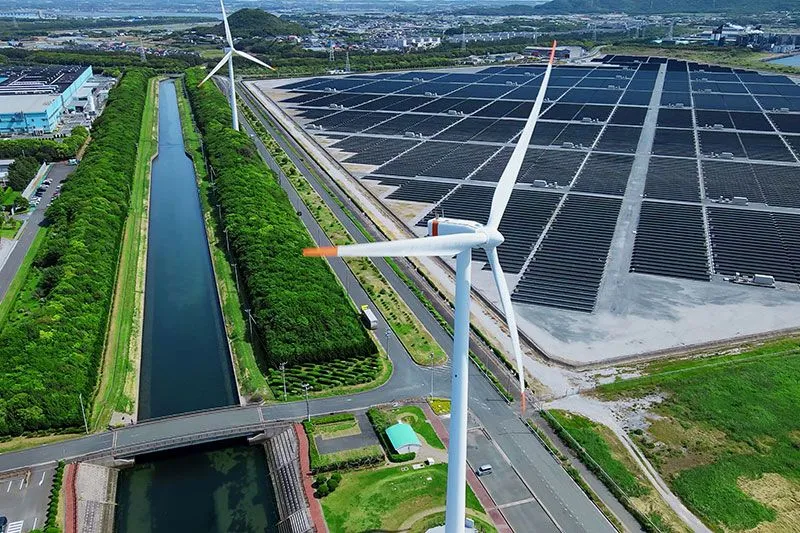
Solar and wind are one of the many energy sectors TUTCO works in. Reliable power generation depends on more than the equipment producing the electricity. The controls, electronics, batteries, switchgear, and other supporting systems also have to operate reliably—often in challenging environments. That's why thermal management plays an important role across TUTCO Farnam's work in Mission Critical Power Generation. From standby generators and battery energy storage systems to data centers, switchgear, and renewable energy, TUTCO Farnam develops electric heating solutions that help critical equipment maintain proper operating conditions. Wind power is a good example.
Protecting Critical Systems Inside the Turbine
Wind turbines may operate in remote areas, offshore locations, mountainous regions, and other environments where cold, moisture, and rapidly changing weather are part of everyday operation. Inside the turbine are control systems, electrical equipment, sensors, power electronics, batteries, and other components that can be affected by low temperatures and condensation.
TUTCO Farnam works with OEMs and system designers to develop heating solutions for turbine control cabinets, electrical enclosures, power conversion equipment, switchgear, monitoring systems, battery systems, and components requiring localized freeze protection. Depending on the application, enclosure heaters can maintain temperatures inside electrical cabinets, while axial fan heaters combine heat and airflow to provide more even temperature distribution throughout larger enclosures. Flexible surface heaters, including silicone rubber, polyimide, and mica designs, can provide direct heat to individual components and surfaces. Heating can be especially important when a turbine is idle or operating at reduced output. During these periods, equipment may no longer generate enough internal heat to protect sensitive components from low ambient temperatures.
Engineered for the Environment
There is no single heater configuration for every turbine. Enclosure size, airflow, ambient temperature, heat loss, available voltage, required wattage, moisture exposure, vibration, space limitations, and component temperature requirements can all influence the solution. TUTCO Farnam works directly with customers to develop heaters around these requirements, from customized standard products to completely custom designs. Wind turbine thermal management is just one part of TUTCO Farnam's growing work in Mission Critical Power Generation, where dependable heating can play an important role in keeping essential power systems ready and operating.
Learn more about TUTCO Farnam's heating solutions for wind turbines, renewable energy, and Mission Critical Power Generation.
DRC HEAT TRANSFER
The DRC Advantage
Engineering, Manufacturing, and Experience Under One Roof
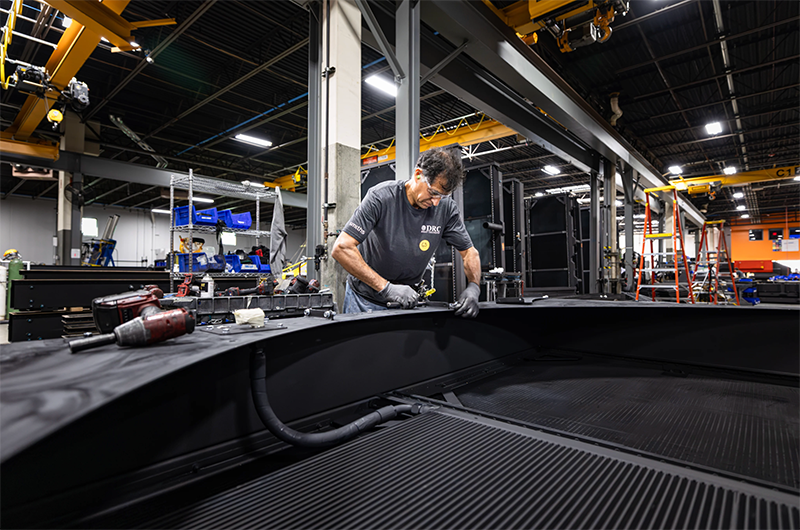
A cooling system has to do more than fit the available space. It has to handle the thermal load, perform in demanding operating conditions, integrate properly with the equipment, and continue doing its job reliably over time. DRC Heat Transfer combines in-house engineering, U.S.-based manufacturing, extensive fabrication capabilities, and decades of heat transfer experience to develop cooling solutions around the needs of the application.
From Engineering Through Production
Every cooling application presents a different set of challenges. Airflow, ambient temperature, heat rejection, fluid conditions, available space, vibration, noise, and service requirements can all influence the final design. DRC’s engineering team works directly with customers to evaluate these factors and develop practical, manufacturable solutions. That support can include heat rejection calculations, core sizing, airflow and pressure-drop analysis, fan selection, structural design, packaging, prototyping, testing, and validation. Once the design is established, DRC has the in-house capabilities to build it. With more than 130,000 square feet of U.S.-based manufacturing space, DRC brings fabrication, CNC production, core manufacturing, assembly, and testing together within one organization. Carbon steel, stainless steel, and aluminum fabrication capabilities allow DRC to manufacture frames, tanks, shrouds, enclosures, brackets, mandrel-bent tubing, and other components that go into a complete cooling package. Keeping more of the process in-house provides greater control over quality, scheduling, design changes, and production consistency while reducing reliance on outside suppliers.
Built to Scale with the Customer
DRC supports cooling applications ranging from approximately 50 to 5,000 horsepower and has the flexibility to handle projects of very different sizes. A customer may need a single replacement radiator, a custom prototype for a new piece of equipment, or an ongoing OEM production program. DRC can support that project from initial development through pilot production and higher-volume manufacturing.
Advanced CNC equipment also allows many custom components to be produced without dedicated dies or tooling. That can reduce upfront costs, speed prototype development, and make it easier to modify a design as requirements evolve. From power generation and mission-critical equipment to industrial, off-road, transit, mining, construction, oil and gas, and distributed energy applications, DRC provides more than a radiator.
The DRC Advantage is the ability to engineer, manufacture, and deliver a complete cooling solution built around the application—and support it from the first prototype through full production. Discover the DRC Advantage and learn how DRC Heat Transfer can support your next cooling application.
Learn more about DRC Heat Transfer at drcht-com

FEATURE VIDEO
Engineering Insights with Jeremy Golden
Jeremy Golden is a Design Engineer with TUTCO Farnam, where he works with customers to develop custom electric heating and control solutions for a wide range of industrial and OEM applications. With an engineering background that includes heat transfer, fluid mechanics, electrical systems, and product design, Jeremy brings a practical, problem-solving approach to each application. His work involves understanding a customer’s process, identifying the thermal and control requirements, and developing a heating solution designed around the equipment and operating conditions. At TUTCO Farnam, Jeremy has worked on projects involving process air heaters, custom heating systems, temperature controls, and integrated control panels. His experience extends beyond initial heater selection and design to troubleshooting existing systems and helping customers identify issues involving airflow, temperature sensing, controls, and overall system performance. Jeremy works closely with customers throughout the design and development process, helping turn application requirements into practical, manufacturable solutions. His approach reflects TUTCO Farnam’s emphasis on engineering heaters around the application rather than asking customers to adapt their equipment or process to an off-the-shelf product.