The Role of Process Heaters in Industrial Systems
A look at the wide range of heating solutions available from TUTCO
From plastics manufacturing and food production to aerospace testing and advanced electronics, process heating plays a far larger role in industrial operations than most people realize. In many facilities, heat is not simply a utility — it is part of the manufacturing process itself. The consistency of that heat can directly affect product quality, production speed, energy consumption, and overall operational reliability.
Industrial process heaters are designed to deliver controlled heat exactly where it is needed. Unlike comfort heating systems used in offices or homes, these systems are engineered for repeatability, precision, and integration into demanding manufacturing environments. Whether heating air, liquids, gases, tooling, or surfaces, process heaters help manufacturers maintain stable conditions that keep production lines moving efficiently. As manufacturing processes become more automated and quality standards continue to tighten, properly engineered heating systems have become increasingly important across nearly every industrial sector.
Different Types of Process Heating Systems
Not all industrial heaters are designed to do the same job. Depending on the application, manufacturers may rely on conductive heaters, process air heaters, or flexible heating systems to achieve the desired result.
Conductive Heaters 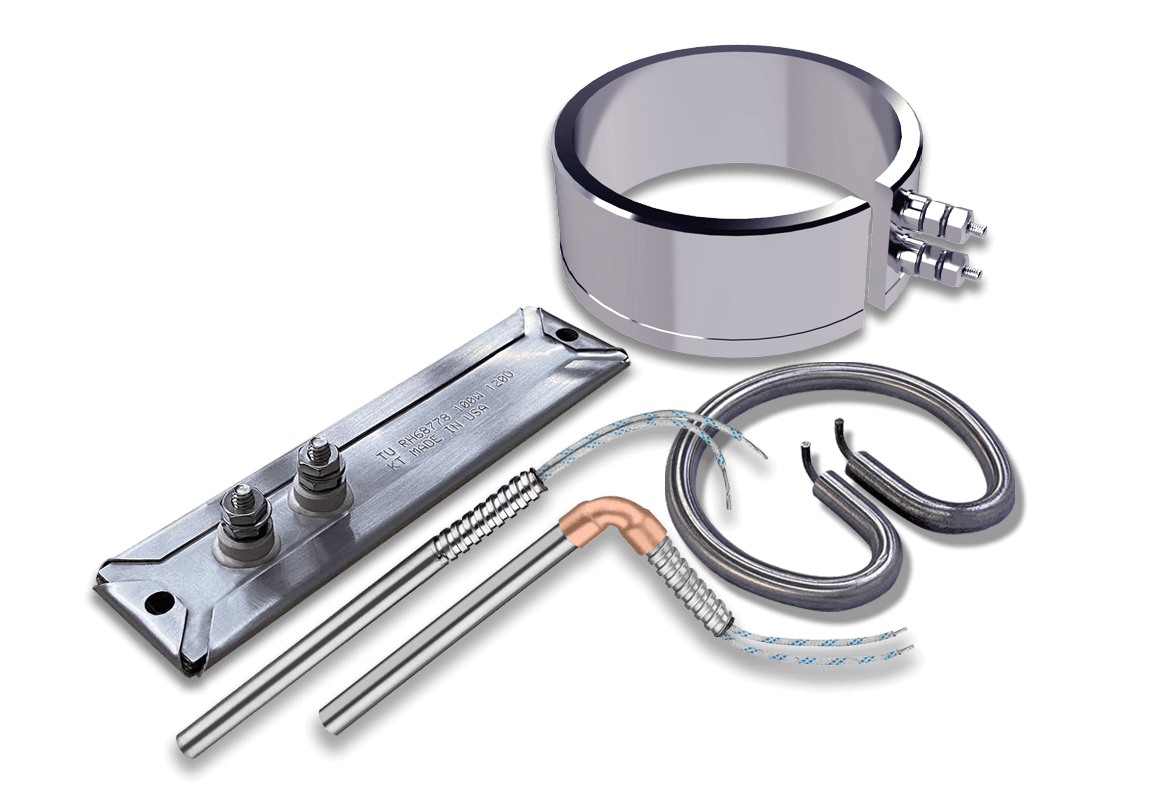 Conductive heaters transfer heat through direct contact and are commonly used in equipment such as molds, tanks, piping systems, dies, and extrusion barrels. These heaters are found throughout industries like plastics processing, packaging, chemical manufacturing, and industrial machinery.
Common conductive heating technologies from TUTCO include band heaters, cartridge heaters, strip heaters, and tubular heaters. In plastics manufacturing, for example, maintaining precise barrel temperatures is critical to ensuring consistent material flow and finished product quality. Cartridge heaters are often installed in tooling assemblies where concentrated, localized heat is required.
The challenge with conductive heating is not simply generating heat, but applying the correct amount of heat in a controlled and reliable manner. Factors such as watt density, sheath material selection, and thermal response all influence long-term heater performance and service life.
Process Air Heaters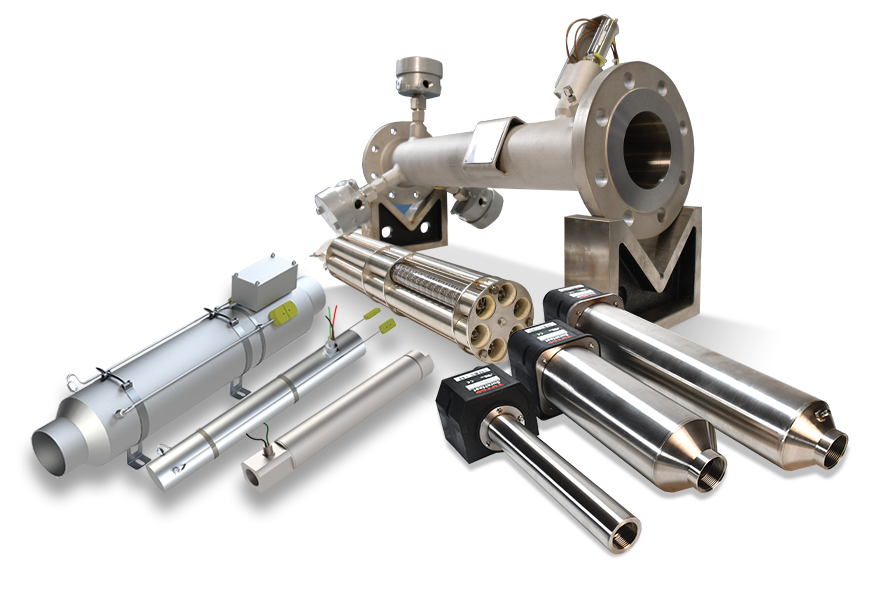 Process air heaters are designed to heat moving air or gas streams and are widely used in applications such as drying, curing, sterilization, thermoforming, heat shrinking, and material preheating.
Companies like TUTCO, TUTCO Farnam, and TUTCO SureHeat manufacture a broad range of electric process air heating systems engineered for industrial environments where precise airflow and temperature control are essential.
TUTCO SureHeat specializes in high-temperature electric process air heaters engineered for demanding OEM and industrial applications. Product lines such as the SureHeat Max, Max HT, Jet, Threaded Inline, and Specialty Flanged Inline heaters are commonly used in air and with non-combustible gasses like Nitrogen, Argon, Helium, Hydrogen and even Syngas for applications requiring elevated temperatures, fast response times, and closed-loop temperature control.
TUTCO Farnam focuses on industrial process air heaters designed for efficient airflow management and integration into OEM systems. Their Flow Torch™, Heat Torch™, Cool Touch™, and Industrial Duct Heater product families are widely used in applications requiring controlled airflow, reduced pressure drop, and dependable process temperatures. Open-coil designs allow the heating elements to interact directly with the airflow, creating highly efficient heat transfer with fast thermal response.
In real-world manufacturing environments, maintaining consistent airflow and temperature can be more challenging than it sounds. Variations in airflow, dust accumulation, pressure changes, and production speed all affect system performance. Well-designed process air heating systems account for these variables through integrated controls, safety interlocks, airflow proving switches, and closed-loop temperature monitoring.
Flexible Heaters
Flexible heaters serve a very different role. Designed to conform to curved or irregular surfaces, these lightweight heating systems are often used where traditional rigid heaters simply would not fit.
Silicone rubber heaters, polyimide (Kapton) heaters, and mica surface heaters are commonly found in aerospace systems, battery technologies, medical equipment, electronics, and compact industrial assemblies. Their ability to provide targeted heat in confined spaces makes them especially valuable in modern equipment design.
As products continue to shrink in size while increasing in complexity, flexible heating technologies are helping engineers maintain thermal stability without adding unnecessary bulk or weight.
Why Heater Design Matters
One of the biggest misconceptions about industrial heating is that all heaters are essentially interchangeable. In practice, heater selection can significantly impact operating cost, maintenance requirements, energy efficiency, and production uptime. For example, excessive watt density is one of the most common causes of premature heater failure. If too much heat is concentrated into a small area without proper thermal management, heater elements can overheat and degrade long before their expected service life.
Temperature control is another major factor. Modern industrial heating systems increasingly rely on closed-loop control systems that use thermocouples or RTDs to continuously monitor process temperatures. Combined with PID controllers and SCR power controls, these systems help minimize thermal overshoot while improving energy efficiency and process stability.
Environmental conditions also play a major role in heater longevity. Moisture, corrosive atmospheres, vibration, washdown environments, and airborne contaminants all influence heater construction and material selection. Choosing the wrong heater for the environment often leads to unnecessary downtime and maintenance costs.
The Shift Toward Electrification
Across many industries, manufacturers are increasingly replacing gas-fired systems with electric process heating technologies. The reasons vary by application, but the advantages are becoming difficult to ignore. Electric heating systems provide cleaner operation, faster response times, and far more precise temperature control than many traditional combustion-based systems. They also eliminate combustion byproducts and reduce the risks associated with fuel storage and open flame systems.
In industries focused on automation, repeatability, and sustainability, electric process heating integrates naturally into modern control systems and plant infrastructure. This is especially important in applications where process consistency directly affects product quality. The transition is also being driven by practical operational considerations. Electric systems often simplify installation, reduce maintenance complexity, and provide tighter integration with advanced manufacturing equipment.
Process Heating as a Competitive Advantage
Process heating is sometimes viewed as a background utility within manufacturing operations. In reality, it is often one of the core technologies influencing productivity, efficiency, and product consistency. Whether the application involves conductive heaters for plastics processing, high-temperature process air systems for industrial drying, or flexible heaters for advanced electronics, the right heating solution can help improve cycle times, reduce waste, protect equipment, and lower overall operating costs.
As manufacturing processes continue to evolve, the demand for more precise, efficient, and adaptable heating technologies will only continue to grow. Companies that approach process heating as an engineered system — rather than simply a commodity component — are often better positioned to improve performance, increase reliability, and support long-term operational growth.
ENGINEERING INSIGHTS
Why Did My Heater Stop Working?
by Sarah Walazek, TUTCO SureHeat Engineer
![Sarah Walazek]() One of the most common calls I receive starts with a customer saying something like, “We installed the heater, turned it on, and it failed immediately.”
One of the most common calls I receive starts with a customer saying something like, “We installed the heater, turned it on, and it failed immediately.”
 One of the most common calls I receive starts with a customer saying something like, “We installed the heater, turned it on, and it failed immediately.”
 In many cases, the assumption is that the heater itself was defective. But after reviewing the application and evaluating the failed heater, the root cause is usually something else. Most heater failures are not manufacturing defects — they’re related to airflow, power control, startup procedures, or installation issues.
The good news is that many of these failures are preventable.
The Fastest Way to Destroy a Heater: Too Much Power, Too Quickly
One of the biggest causes we see is improper ramp-up. Customers often apply full power immediately, expecting the heater to gradually work its way to temperature. But high-performance electric process heaters respond very quickly. If power is applied too aggressively, the element temperature can rise faster than the control system can react, creating a temperature overshoot condition.
In some cases, the heater can fail almost instantly.
A simple way to think about it is like installing the wrong voltage light bulb. You flip the switch, it flashes bright for a second, and then burns out immediately. The same thing can happen with a heater if too much power is applied too quickly.
That’s why ramp rates are so important. Each heater has recommended ramp-up guidelines based on airflow and operating temperature. Following those recommendations helps prevent overshoot and dramatically improves heater life.
SEE TECHNICAL DOCUMENTS
Low Airflow Is More Dangerous Than Most People Realize
Low airflow is another major cause of failure, and it’s one that many people underestimate.
These heaters rely on moving air to carry heat away from the element and across the thermocouples. When airflow drops too low, heat begins to build up inside the heater. Instead of moving through the system, the air stagnates and creates what we often call an “oven effect.”
At that point, the internal element temperature can continue climbing even if the thermocouple isn’t seeing the true temperature. Eventually, the element overheats and fails. When we inspect heaters damaged by low airflow, the signs are usually obvious. The elements may appear melted, collapsed, or severely distorted from overheating.
What surprises some customers is that low airflow isn’t always caused by the blower itself. Restrictive nozzles, clogged filters, dirty compressors, or excessive back pressure can all reduce airflow enough to create problems. That’s why we strongly recommend using flow switches or flow sensors whenever possible. These devices can shut power off to the heater if airflow drops below a safe level, helping prevent catastrophic damage. This is also where properly designed control panels become extremely valuable because they can integrate airflow protection directly into the control logic.
Cheap Controls Often Create Expensive Problems
Another issue we see frequently involves power controls.
Some customers try to build their own systems using inexpensive SCRs or relays that aren’t designed for fast-response heaters. The problem is that the heater reacts much faster than the controller can regulate power. By the time the controller responds, the heater has already overshot the target temperature.
Instead of maintaining a stable process temperature, the system continuously swings above and below the setpoint, putting unnecessary stress on the heating element. For our heaters, we recommend SCR cycle times of 200 milliseconds or faster. The control system needs to react quickly enough to match the heater’s response time. Otherwise, the heater may continue receiving power longer than intended, which can shorten element life significantly.
Sometimes the Problem Is Installation
Installation mistakes can also create problems before the heater ever goes into operation.
One common issue involves thermocouple wiring. Our heaters use Type K thermocouples, and reversing the polarity can cause the temperature reading to behave incorrectly. If the controller thinks the temperature is dropping when it’s actually rising, it will continue calling for more power until the heater overheats.
We also occasionally see mechanical damage caused during installation. On some heaters, overtightening fittings beyond the specified torque values can crack the housing. Once that happens, the damage usually cannot be repaired. When a heater failure occurs, the first step is gathering information. We ask about airflow, voltage, operating temperatures, startup procedures, controls, and the overall application. Photos are extremely helpful because many failure modes are visually recognizable right away.
What Happens When a Heater Fails?
If needed, the heater can be returned for analysis. By examining the element condition and internal components, we can usually determine whether the failure was caused by airflow, overshoot, voltage issues, or another operating condition. In reality, electric heaters are extremely reliable when applied correctly. Most failures come back to system setup, controls, or operating conditions — not the heater itself.
That’s why proper airflow, proper controls, proper wiring, and proper startup procedures matter so much. And if there’s one final piece of advice I would give, it’s this: ask questions before powering the heater on.
An email with a few pictures during installation can often prevent a failure entirely. It’s much easier to troubleshoot beforehand than it is to analyze a melted heater after the fact.
THINKING OUTSIDE THE BOX
No Moisture Allowed:
The Use of Electric Heat in Dehumidification & Drying!
by Jeff Elrod
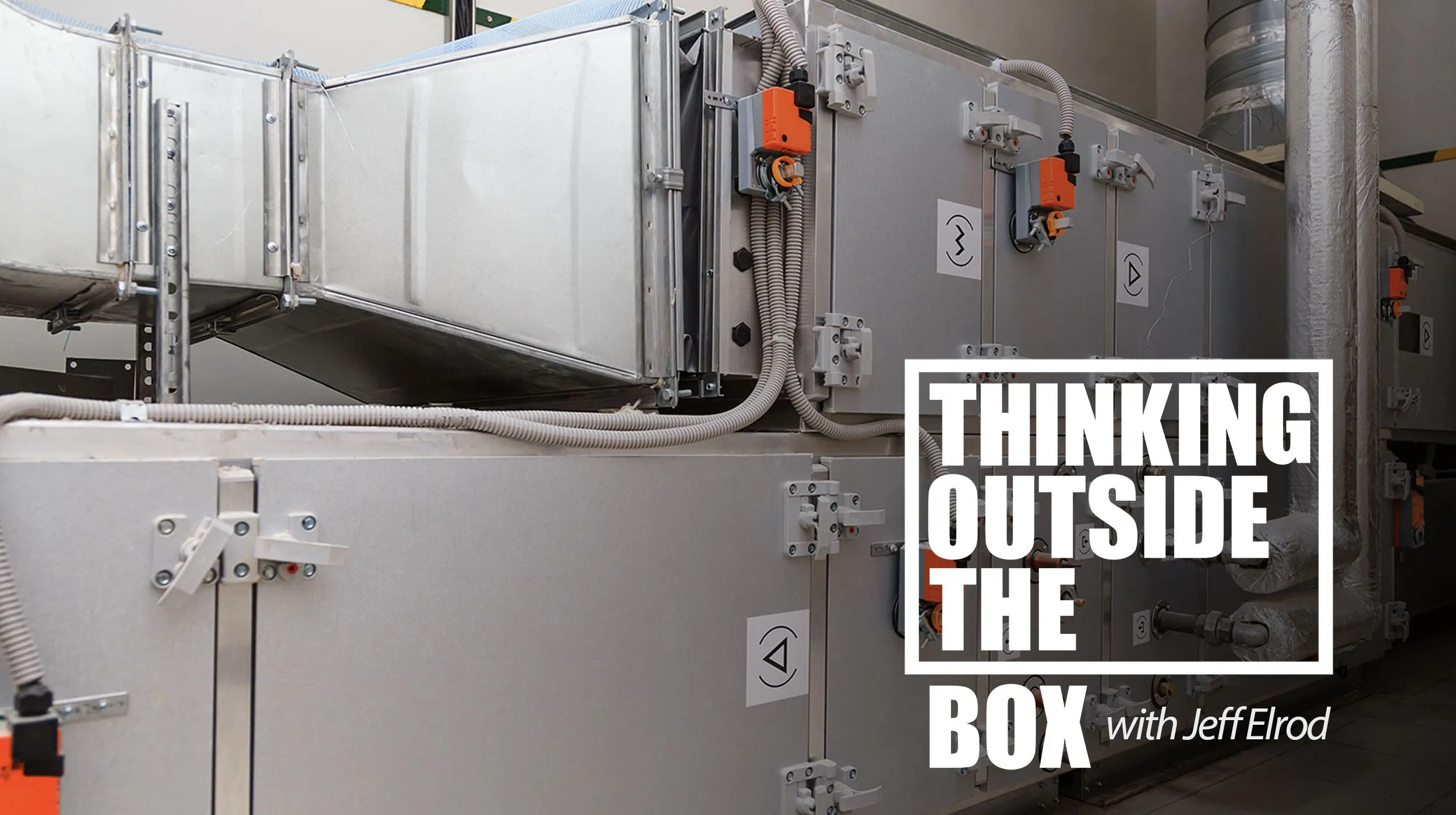
This month, we are taking a closer look at the use of electric heat in dehumidification and drying applications. Electric heat is one of the most effective methods for removing moisture from a process or environment. Excess moisture can be extremely detrimental in many situations, ranging from product damage to mold growth. While mold may not always destroy a product, it can require extensive cleanup efforts and may cause permanent staining or discoloration. Moisture can also negatively impact industrial processes, preventing them from operating as smoothly and efficiently as possible.
Let’s first examine drying applications. Many industrial processes require moisture to be removed before production can proceed efficiently. Forced-air electric heaters, like those manufactured by TUTCO Farnam Custom Products, are commonly used to blow warm or hot dry air across materials to remove moisture. This is especially common in the plastics industry, where materials must be dried before entering injection molding machines—particularly recycled plastic media—and where finished parts may also require drying.
In some manufacturing processes, moisture is intentionally added or required during one stage and then must be removed later for the process to continue efficiently. Electric heat is also widely used for drying applications in industries such as printing, cleaning, agriculture, food service, and mining.
The use of electric heat in dehumidification applications is not new, but its role extends far beyond traditional HVAC systems. While HVAC equipment is commonly used to dehumidify conditioned air, dehumidification serves many other important purposes. Libraries and museums use dehumidification systems to help preserve valuable paper documents and textiles, many of which are extremely old and fragile. Agricultural operations often store crops in heated bins or chambers to remove excess moisture and slow decomposition, helping prevent mold and rot.
Dehumidification systems are also commonly found in greenhouses, recreational facilities such as gyms and pool rooms, and medical facilities. In addition, certain geographic regions require more extensive dehumidification due to higher humidity levels and climate conditions.
With the rapid growth of the data center industry, drying and dehumidification applications have become increasingly important. Data centers rely on moisture control throughout multiple stages—from the manufacturing of equipment to maintaining dry operating environments. The heat generated by servers and electronic equipment, combined with the potential damage caused by damp or humid air, makes dehumidification essential for protecting sensitive systems and maintaining operational reliability. As technology continues to advance, effective dehumidification is becoming more critical than ever.
At TUTCO Farnam Custom Products, we offer a wide variety of forced-air heating solutions for the drying and dehumidification industries. Our products include industrial duct heaters, Heat Torch®, Cool Touch™, Flow Torch™, and Pressure Torch™ solutions. These products range from compact units designed for small drying applications to large custom-engineered systems for industrial dehumidification and drying processes. We pride ourselves on “thinking outside the box” to develop the perfect solution for your unique application and challenges.
Share Details & QuoteFEATURE APPLICATION
Electric Heaters for Research Facilities
Precision Heating for Laboratories and Advanced Testing

In research environments, precision matters. Whether a laboratory is testing advanced materials, validating product performance, analyzing gases, or developing new technologies, temperature control can directly affect the quality and repeatability of results. Even small temperature fluctuations can alter data, impact chemical reactions, or create inconsistencies in testing conditions.
That is one reason electric heat has become such an important part of modern laboratory and research operations. It provides clean, responsive, and highly controllable heat without introducing combustion gases or open flames into sensitive environments. At TUTCO Farnam Custom Products, we work with research facilities, OEM instrument manufacturers, and specialty laboratories to develop heating solutions designed specifically for these demanding applications.
Many laboratory systems require carefully controlled gas stream heating. Air, nitrogen, CO₂, and other inert gases are often heated before entering analytical or testing processes. Maintaining stable gas temperatures is critical because fluctuations can directly affect testing accuracy and repeatability. Electric heat allows researchers to maintain precise thermal conditions while providing fast response times and dependable control.
Environmental and material testing chambers are another area where electric heat plays a major role. These systems simulate years of environmental exposure by subjecting products and materials to controlled heat, humidity, and airflow conditions. Consistent thermal performance is essential for producing valid test data. Electric heaters allow these chambers to maintain highly repeatable conditions while integrating easily with automated controls and sensors.
Electric heat is also widely used in laboratory drying and dehumidification applications. Sample preparation often requires moisture removal before testing can begin. Controlled warm airflow helps dry materials evenly without introducing contaminants or excessive temperature variation. In research environments, this level of consistency can make a significant difference in overall test accuracy.
Cryogenic systems present another unique challenge. While these environments operate at extremely low temperatures, electric heating is often required to stabilize portions of the process or prevent unwanted thermal fluctuations. Liquid nitrogen systems, for example, may use specialized heating elements to maintain precise temperature control within very narrow tolerances. Beyond these larger systems, electric heat is integrated into a wide range of laboratory equipment and OEM instruments. TUTCO Farnam heating solutions are used in gas chromatography systems, sterilization equipment, incubators, laboratory ovens, washers, bath heaters, and custom analytical instruments used in chemistry and life science laboratories worldwide. In many cases, the heater becomes a critical part of the instrument itself. Space limitations, strict thermal requirements, and reliability concerns all need to be considered during the design process. A heater failure in a laboratory environment can interrupt testing schedules, compromise research, or delay product development.
That is why engineering support is such an important part of what we do. Laboratory and research applications are rarely simple. Every system presents its own combination of airflow challenges, temperature ranges, voltage requirements, dimensional limitations, and safety considerations. With decades of thermal application experience, our engineering team often helps customers evaluate heater integration strategies and identify potential issues early in the process. While we generally do not design the customer’s entire system, we are always willing to collaborate and provide guidance based on similar applications we have supported in the past.
TUTCO Farnam offers a broad range of heating technologies for laboratory and research environments, including cartridge heaters, strip heaters, flexible heaters, and process air heaters. Some applications require compact high-watt-density heating, while others need carefully distributed heat across larger surfaces or airflow systems. In many cases, the final solution involves a fully custom-engineered heater assembly designed specifically around the customer’s equipment and performance requirements. As research facilities continue advancing technologies in life sciences, analytical testing, environmental simulation, and materials development, the demand for precise thermal control continues to grow. Electric heat remains one of the most effective and reliable ways to achieve that control, helping laboratories maintain the stable, repeatable environments their work depends on every day.
FEATURE VIDEO
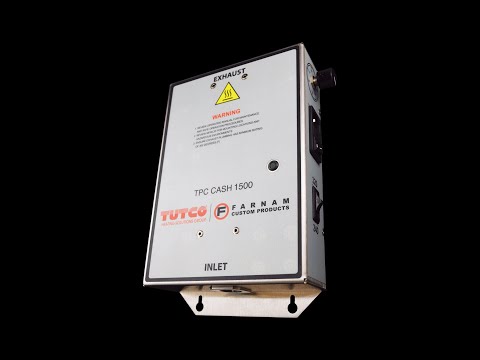
TUTCO Farnam TPC-CASH 1500
In this month’s Feature Video, we take a closer look at the TUTCO Farnam TPC-CASH 1500 compressed air heating system — a compact, all-in-one solution designed to simplify process air heating applications.
The TPC-CASH 1500 combines a 1.5kW Cool Touch™ inline air heater with adjustable temperature control, a flow switch, high-limit thermostat protection, and a solid-state relay, all packaged inside a convenient wall-mountable steel enclosure. Available in both 120V and 240V configurations, the system is ideal for applications requiring moderate wattage and dependable thermal control without the complexity of sourcing and integrating multiple components.
Designed to handle airflow rates commonly between 25 and 30 SCFM, with pressures up to 120 PSIG, the TPC-CASH 1500 offers adjustable output temperatures ranging from 100°F to 500°F depending on airflow conditions. From drying and warming to process air applications, the TPC-CASH 1500 delivers a clean, reliable, and easy-to-install electric heating solution for a wide range of industrial environments.