The Global Sourcing of Flexible Heaters
 Global Sourcing Strategies for Flexible Heaters
In today’s ever-changing global market, flexibility isn’t just important in heater design — it’s essential in your supply chain. With shifting tariffs, regional disruptions, and evolving trade policies, manufacturers need sourcing strategies that keep production moving and risk minimized.
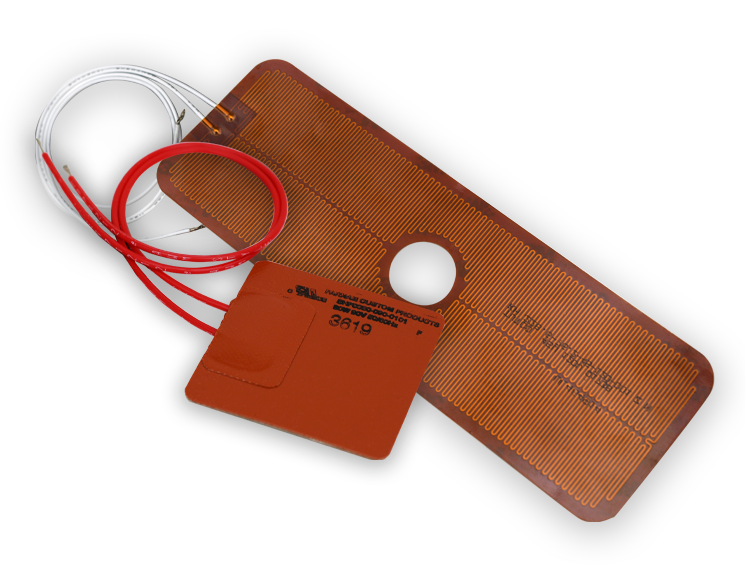
At TUTCO Farnam, we understand these challenges. That’s why we support customers through six global manufacturing locations across the United States, Canada, Mexico, and China. For flexible heaters specifically, we manufacture both our silicone rubber and polyimide (Kapton) heaters in China and Mexico, giving customers valuable sourcing options.
Flexible Heaters Built for Demanding Applications
Our highly customizable OEM flexible heaters are designed for applications with a wide range of thermal and environmental requirements. UL Listed and engineered for durability, they offer rapid temperature ramp rates, high operating temperatures, and the ability to conform to irregular surfaces where rigid heaters simply won’t work.
Whether your application requires heaters wrapped around pipes, adhered to complex surfaces, or integrated into compact assemblies, our solutions are built to perform in industries such as aerospace, medical devices, electronics, automotive systems, and food processing.
Manufacturing Flexibility That Protects Your Supply Chain
Both polyimide and silicone flexible heaters are fully manufactured in China and Mexico, with each facility equipped to handle complex custom configurations and wide temperature requirements. This gives customers real options when navigating tariffs, logistics challenges, or regional instability. We also offer dual sourcing programs — allowing you to designate China as your primary manufacturing location with Mexico as backup, or vice versa. This added redundancy helps reduce risk and ensures continuity without sacrificing quality or performance.
Engineering Without Borders
Global manufacturing doesn’t mean disconnected support. Every flexible heater project can be backed by U.S.-based engineers, China-based engineers, or a collaborative team working together. By leveraging engineering expertise across regions, we ensure optimal heating performance tailored to your specific application. In a market where uncertainty is constant, flexibility in both product design and sourcing strategy makes all the difference. At TUTCO Farnam, we deliver both — so you’re prepared for whatever comes next.
ENGINEERING INSIGHTS
An Engineer’s Take on Switching Frequency and Heater Life
by Francisco Herrera, TUTCO Farnam Engineer
![Francisco Hererra]() Recently, I received a call from one of our customers with what seemed like a straightforward question—but as is often the case in engineering, the answer required a deeper look.
Recently, I received a call from one of our customers with what seemed like a straightforward question—but as is often the case in engineering, the answer required a deeper look.
 Recently, I received a call from one of our customers with what seemed like a straightforward question—but as is often the case in engineering, the answer required a deeper look.
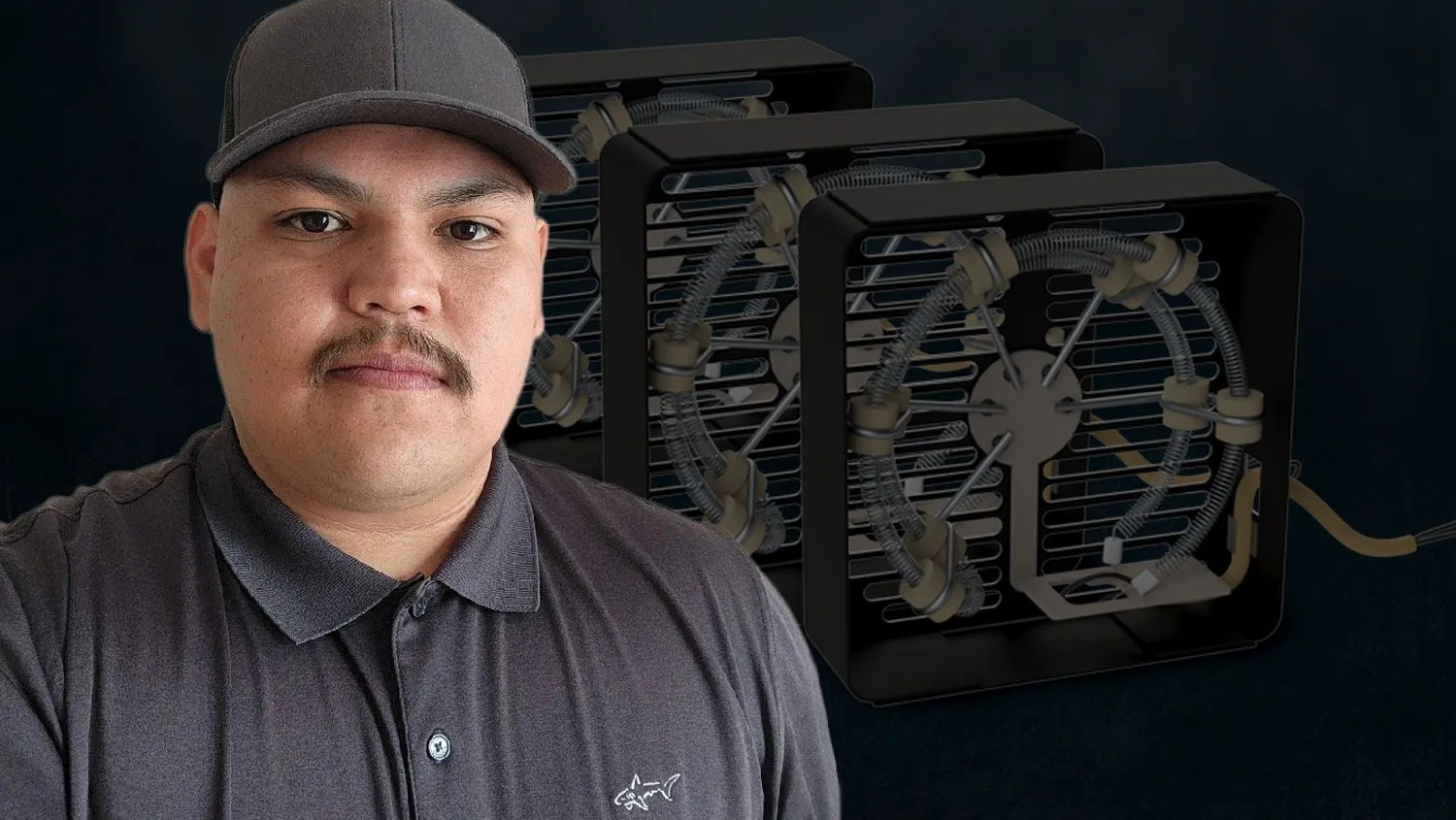
 They were using a 4.7” Axial Fan Heater rated at 600W, 120V AC, and regulating temperature by adjusting the heater’s duty cycle anywhere from 1% to 100%. To do this, they were switching the heater on and off at intervals measured in milliseconds. Their concern was valid: would constantly cycling the heater on and off—especially at low switching frequencies—degrade the life of the heating element due to repeated heating and cooling?
They already understood the upper limits of their system. Because they were using a zero-crossing SSR, switching events were constrained by the AC line frequency (50–60 Hz), since the relay only switches when the waveform crosses zero. They were also intentionally avoiding switching around 8.8 Hz, knowing that power cycling near this frequency can negatively impact IEC 61000-3-3 testing for voltage fluctuation and flicker. The real question was about the lower end: How slow is too slow?
One important detail in their setup was that airflow over the heater was constant. Even when the heater was switched off, the fan continued to run as part of their normal process. That airflow plays a critical role in how the heating element experiences thermal stress.
When we stepped back and looked at the problem from a heater-life perspective, the issue turned out to be less about switching frequency itself and more about the heating and cooling cycles imposed on the element. High switching frequencies—even when each cycle lasts only milliseconds—can cause the element to repeatedly heat up and cool down in very short intervals. With constant airflow, the element can cool enough between these micro-cycles to introduce thermal stress over time. That stress adds up and can contribute to premature wear.
Counterintuitively, running at lower switching frequencies can be easier on the heater. Longer on-and-off cycles allow the element to heat and cool more gradually, reducing the severity of thermal cycling. Based on this, I recommended avoiding high-frequency switching altogether and targeting a lower operating range—typically around 1 to 5 Hz on the low end.
This recommendation ran opposite to their initial assumption. They believed higher switching frequencies would be better for the system overall. After discussing the scenario with my fellow engineers here at TUTCO-Farnam, we agreed that slower switching would actually place less stress on the heater. The longer cycles provide better control over how quickly the element heats and cools, allowing it to operate at the heater’s optimal pace.
This project was a great reminder of why collaboration matters—both with customers and within our own engineering team. There’s rarely just one “right” way to approach a thermal problem, and the best solutions often come from combining application knowledge with real-world experience. Our engineering team brings more than 75 years of combined expertise in process heating, applied across thousands of applications, and we continue to learn from every new challenge that comes our way. At the end of the day, that ongoing exchange of ideas is what helps us design smarter systems, extend heater life, and deliver better outcomes for our customers.
FEATURE PRODUCT
TUTCO Farnam Industrial Duct Heater
Inline duct heaters specifically designed for commercial and industrial process applications
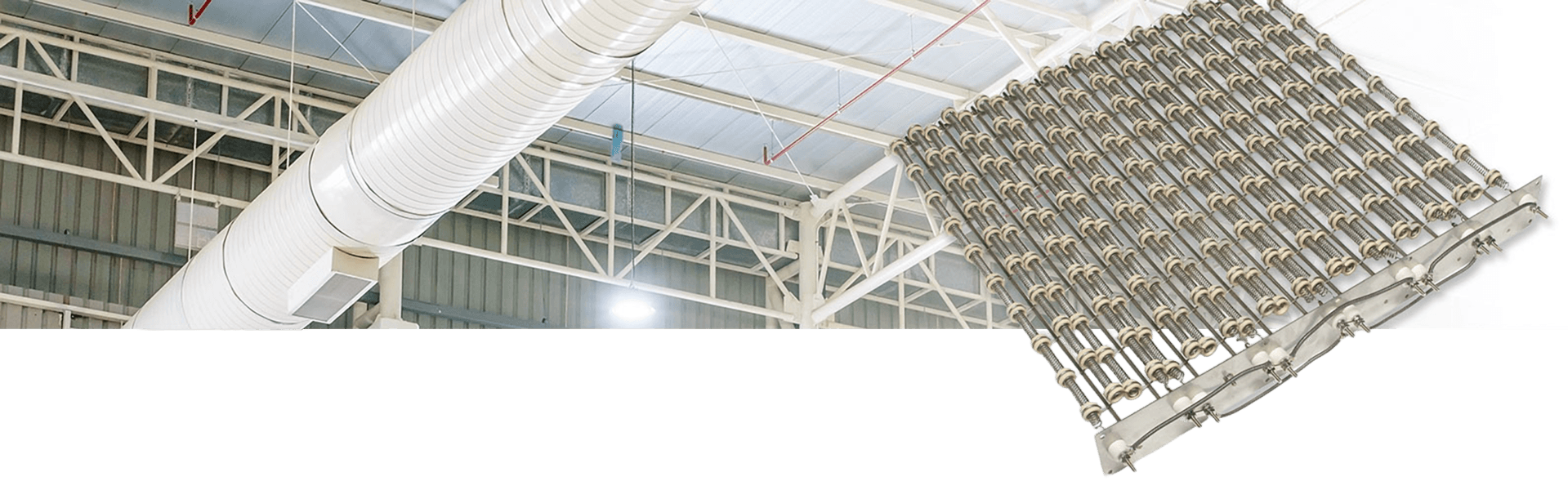
As the name implies, duct heaters are installed directly into ductwork—typically through the side wall—so airflow passes around and through exposed open-coil heating elements. This design allows for immediate inline heat transfer from wire to air, delivering fast warm-ups and cool-downs while maintaining consistent, efficient heating.
Rugged open-coil elements are engineered to heat large volumes of process air while remaining relatively cool themselves. The open-frame construction also minimizes pressure drop and prevents excessive temperature build-up. With low static pressure requirements, users can often select smaller, more economical blowers—reducing overall system cost.
Standard pre-designed sizes are available in 6”, 12”, 13”, 22”, and 36, but TUTCO Farnam can produce custom rectangular units and round heaters for unique applications. Single-phase and three-phase configurations are available in voltages up to 480V (with higher voltage options available). Individual heaters range from less than 1 kW up to 75 kW and can be staged for greater control. Each stage operates as a standalone circuit, allowing independent wiring to reduce amp loads and cable size—while still enabling unified operation when needed.
Watt density plays a critical role in heater life. While coils can be designed up to 90 W/in², more conservative designs—around 50 W/in²—help extend service life. Proper airflow is equally important. A minimum of 200 feet per minute (fpm) is recommended to prevent overheating, with a maximum of 7000 fpm to avoid coil deflection.
Horizontal mounting is strongly preferred. The coil axis must remain horizontal to ensure proper ceramic bushing support and prevent sagging, shorting, or premature failure. When installing multiple heaters, spacing them several inches apart allows air to properly mix before reaching the next heating bank. Downstream thermocouples should also be positioned far enough from the heater to measure well-blended air.
With a long history of trouble-free service, TUTCO Farnam industrial duct heaters are straightforward to install and built to perform. When properly installed and operated within recommended airflow and watt density parameters, they provide years of dependable, efficient process heating.
THINKING OUTSIDE THE BOX
Save Up: Electric Heat in Thermal Energy Storage
by Jeff Elrod
 The laws of thermodynamics state that energy cannot be created or destroyed, only transformed or transferred, as a former teacher of mine would say, “You cannot get something for nothing”. Basically, energy only changes form. Generally, when you use an energy force in one form to “power” a process, the excess energy is many times generated as waste considered unusable with quality decreasing as it “spreads out”. In today’s world where more energy is needed than ever, everyone is trying to harness the “wasted” energy and use it for another purpose, which is the thought behind energy storage systems. Much of the wasted energy is not even from manmade processes much of it is from naturally occurring things such as the sun in the form of solar, wind or other naturally occurring events.
Naturally occurring energy is often referred to as green energy since it is already there and no resources are used during the capturing process, but they are a form of energy that is not available 24/7. The solar power of the sun can only be harnessed on a sunny day, cloudy days will at least lower the efficiency of this type of power if not shut it down completely. Solar energy cannot be produced during the nighttime hours, which affects this energy source more at certain times of year. The wind does not blow all the time, while wind mill farms are generally strategically located in areas where the wind generally blows, there are always times it does not blow or blows with less velocity lowering the output of these facilities. Many are now trying to harness that energy that is not being used and efficiently use it as free or low-cost energy for different processes. By storing this energy when peak output is happening, maintaining it and then using it when this energy is not available is what these systems are being developed to do.
While thermal energy storage has been around for well over a decade, it has not been feasible and mostly in the research & development phases, but now as with any process being studied, technology is making it more efficient and to a point is starting to make sense for it to be used in a more widespread manner. There are many different companies playing this market and most of them are attacking this process with a different solution. Many of these solutions require electric heat for the process and Tutco-Farnam Custom Products has stepped up and worked within this industry and came up with solutions for this unique and specialized market. We are willing to work with our customers to meet their needs, that could mean one of our standard process heaters, a customized version of one of our standard process heaters or even a brand-new design to work with a specific design where our standard is not going to work. Electric Heat can be used on Solid Oxide Electrolysers, Sensible Heat, Latent Heat and other types of energy storage systems.
Also, many times we pair our process heat solutions with either a standard UL508A Heat Control Panel or with a Custom UL508A Control Panel Solution where we can add PLC’s, VFD’s, SCADA, HMI, etc. We want to make Farnam you one stop shop for system requirements for electric heat systems and panel shop needs.
Remember, we are always here to help you “Think Outside the Box” to get you the solution that will work for you even if it is something that is outside of the normal offering.
FEATURE VIDEO
The People of TUTCO Take Center Stage
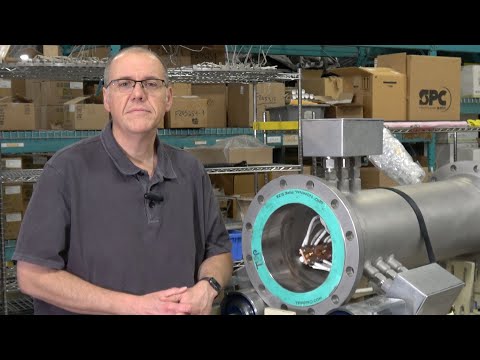
At TUTCO, excellence is built into everything we do—and in Cookeville, Tennessee, that commitment comes to life every single day. The team behind our duct and conductive heating products combines hands-on craftsmanship with deep technical expertise. From precision assembly and quality testing to engineering support and customer collaboration, every step reflects a shared dedication to doing the job right. Duct heaters and conductive elements play a critical role in maintaining process temperatures, protecting equipment, and ensuring operational efficiency. What truly defines Cookeville is the people. It’s the manufacturing specialists who bring years of experience to the production floor. The engineers who solve complex application challenges. The quality professionals who hold the line on standards. The team leaders who foster collaboration and accountability. Together, they create a culture rooted in pride, ownership, and continuous improvement. There’s a strong sense of teamwork here—an understanding that success isn’t individual, it’s shared. This video shines a light on the individuals who power TUTCO’s duct and conductive product lines in Cookeville.