
Humidity Control for Pet Food Production
At TUTCO Farnam, humidity control is a core part of what we do. From office environments and retail spaces to large-scale production facilities—and even restoration projects following floods or water damage—we design heating solutions that allow operators to precisely manage moisture in the air. It is no surprise, then, that pet food manufacturers regularly turn to us for help controlling humidity during one of the most critical stages of their process: drying.
Dried pet food—often referred to as kibble—is produced by blending ground ingredients such as meat meals, grains, fats, vitamins, and minerals into a uniform dough. This mixture is cooked, most commonly through extrusion, using heat and pressure. The cooked product is then shaped, cut into kibble, and dried to reduce moisture to shelf-stable levels. After drying, fats, flavorings, and palatants are applied, followed by cooling, screening, and packaging.
If you examine the label on a bag of pet food, you will find a specified maximum moisture content. This number matters for two critical reasons. First, excessive moisture can cause the product to become prematurely susceptible to mold and spoilage. Second, consistent moisture control ensures the animal receives proper nutrition in every serving. Achieving and maintaining this balance requires precise thermal control and reliable humidity management.
Pet food producers came to TUTCO Farnam looking for a more effective way to heat air within their production lines so they could tightly control humidity during drying. The solution was clear: Flow Torch™ air heaters paired with custom-engineered control panels.
 Flow Torch™ heaters deliver rapid, consistent heat at high airflow rates, providing the power and efficiency required for demanding drying applications. With customizable configurations and operating temperatures up to 900°F, these heaters are well suited for the continuous, high-performance environments found in pet food manufacturing.
Equally important is the control system. TUTCO’s custom control panels are designed to provide safe, precise, and reliable operation tailored to the specific needs of each application. Because we design and manufacture both the heaters and the controls, our engineers are able to integrate the latest safety features and control technologies into a unified system. This depth of expertise ensures dependable performance and reflects our commitment to quality.
The end result is a heating system that maintains optimal humidity levels throughout the drying process while remaining highly energy efficient—helping pet food manufacturers protect product quality, extend shelf life, and operate with confidence.
ASK IAN
Band Heaters: How to Properly Install Them
by Ian Renwick
 These instructions can be applied to any band heater, be it an HT Mica Band, MI Better Band, Permaheat Band or any other variety.
 Before beginning installation, make sure that the heater will produce the wattage desired at the applied voltage. Check that the voltage being applied to the heater is correct.
The surface to be heated should be clean and smooth. Projections of baked-on contaminants or surface cavities may reduce heater life. Conduction really is king and the band heater needs to have the best surface-to-surface contact with the barrel it’s clamped around so that good heat transfer occurs.
A Good General Procedure Should Be:
Seat the heater in its intended position, making sure that it’s square to the surface and not skewed.
Tighten the heater clamping screws evenly, tightening each clamping screw gradually if there is more than one.
10-24 screws should be tightened to 90 in·lbs
1/4-20 screws should be tightened to 120 in·lbs
After confirming that the supply voltage is correct, connect the heater electrically, making sure the power leads to the heater aren’t kinked or have the possibility of being crushed by moving parts.
Energize the heater allowing it to reach operating temperature.
Turn off the power to the heater (for safety reasons) and immediately re-tighten all the clamping screws to take up elongation caused by thermal expansion. There are applications where, because of the heater size, the re-tightening operation should be done more than once.
A heater will expand by roughly a millionth of an inch for each inch of circumference for each °F. For example, a heater with an 8” diameter raised to 500°F (from 72°F) will have a circumference that lengthens by ≈0.011” once it gets to temperature. The math is 8 ∙ π ∙ (500-72) / 1000000 ≈ 0.011”. Be sure to take up that slack by retightening the clamping.
Energize the heater again and you should be good to go.
Other Point to Consider:
If necessary, apply thermal heat transfer compound to the barrel before installing the heater, making sure it doesn’t get where it’s not supposed to, and stays away from the power connections of the heater. It’s best to use a thermal transfer material that doesn’t contain any metal, like copper or lithium. They can conduct electricity if they work their way into the wrong place, wreaking havoc on the heater. A good material to use is boron nitride because it has a good temperature rating and is electrically non-conductive.
Insulating blankets can help with band heaters. When installed properly they greatly reduce the work that needs to be done by a heater by slowing down the loss of heat from the system.
As with any electric heating element, keep moisture away from the heater, especially where the power is connected.
To Summarize:
Proper installation of a band heater is critical for achieving optimal performance and extending its service life. By ensuring the correct voltage, maintaining clean contact surfaces, and following the recommended tightening and re-tightening procedures, you maximize heat transfer efficiency and minimize the risk of premature failure. With these steps, your band heater will operate reliably and deliver consistent heat for your application.
Above all else, always prioritize safety.

FEATURE APPLICATION
Surgical Applications
Meeting the uncompromising demands of the medical device industry.
In medical and surgical environments, temperature is never incidental. It directly affects patient comfort, recovery, infection control, and the reliable operation of life-saving equipment. For decades, TUTCO Farnam has played a critical role behind the scenes—engineering heating elements that help medical devices perform safely, consistently, and precisely when it matters most.
Today, more than 70% of patient warming blankets in use worldwide rely on a custom TUTCO Farnam heating element. That level of adoption did not happen by accident. It reflects long-term partnerships with medical OEMs, deep engineering expertise, and a proven ability to meet the uncompromising demands of the medical device industry.
Medical device development operates under some of the most demanding standards of any manufacturing sector. Advanced devices require absolute precision, extensive testing, and complete confidence in every component. At TUTCO Farnam, our engineers work closely with OEM design teams from the earliest stages of development, navigating tight tolerances, extended validation cycles, and complex regulatory requirements. These are not short engagements; they are collaborative relationships that often span months or years, with performance verified repeatedly throughout the life of the device.
Nowhere is this level of precision more important than in the surgical environment. Keeping patients at a safe, stable body temperature during procedures is critical to recovery and overall outcomes. Reliable temperature control extends well beyond the patient alone. Fluids must be delivered at controlled temperatures, instruments must be properly sterilized, and operating rooms must maintain carefully balanced thermal and humidity conditions to help reduce the risk of infection. TUTCO Farnam heating elements support this entire ecosystem, from IV fluid warming and patient warming systems to sterilization and dehumidification equipment that help keep surgical spaces safe and controlled.
Many medical applications demand more than off-the-shelf solutions. Devices are often compact, complex, and space-constrained, requiring heating elements that fit seamlessly into unique geometries while delivering repeatable performance. TUTCO Farnam specializes in designing heaters on a per-application basis, whether for a specialty surgical instrument, a medical storage device, or a fluid warming system. In one such application, our engineers integrated fan mounting brackets directly into the heater housing, reducing component count, simplifying assembly, and lowering system cost—without compromising safety or performance.
Environmental factors also play a critical role in surgical settings. Proper humidity levels support patient comfort, improve medicinal delivery, and help limit the spread of airborne pathogens. TUTCO Farnam heating solutions enable precise humidity control, contributing to safer, more stable clinical environments.
At TUTCO Farnam, our products play a vital role in warmer patients, safer procedures, sterile instruments, and better outcomes. That quiet reliability is exactly what medical OEMs expect—and why they continue to trust TUTCO Farnam as their heating partner in medical and surgical innovation.
Industrial Control Panels: Not Just for Heaters
by Jeff Elrod
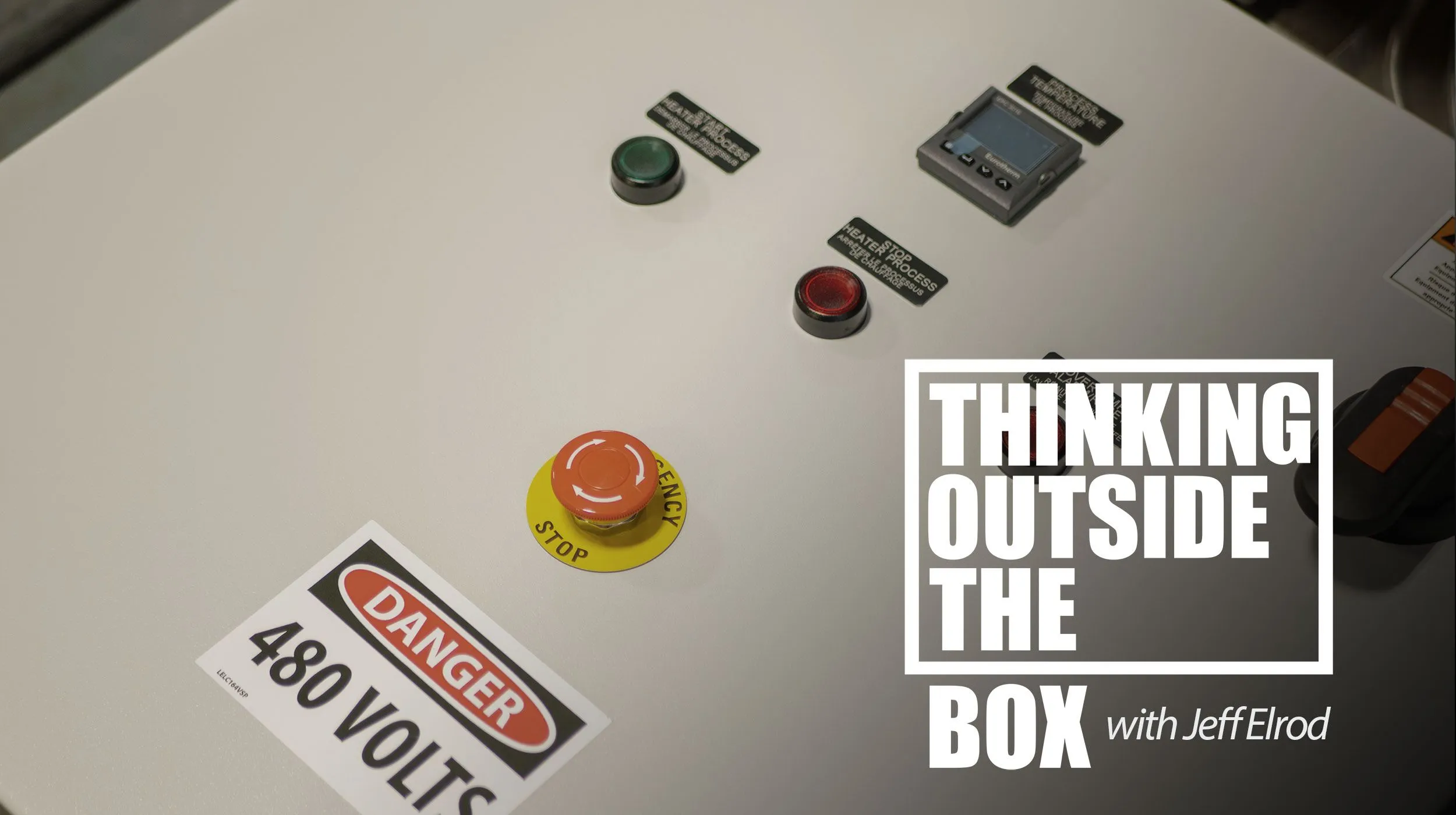 Farnam Custom Products has always been the go-to source for all your application-specific heating needs. To further support you our customers, we became a UL 508A certified panel shop to provide control solutions for your electric heating applications. What you might not know is that access to Farnam’s UL508a industrial control panel team provides you with many other opportunities to further tailor your specific processes.
We are building electric heat control panels that offer a basic heat controller function. In addition, we build panels that offer value-added solutions including but not limited to PLCs, HMIs, and SCADA for automation and centralized control. Just let us know your specific control panel needs and we will be more than happy to work with you to supply a solution that meets your needs.
We have the capabilities to build fully custom UL 508A Industrial Control panels for any application that falls under the UL 508A umbrella. Some of the industrial process applications these panels can be used in are network and data centers, operator consoles, alternative energy, decarbonization processes, industrial machinery, power factor correction, commercial & industrial HVAC chiller/boiler controls, building automation controls, and dehumidification. Basically, if you have a need for any industrial control panel, let us be your partner. As a side note, we are also actively pursuing adding other UL Standard Certifications for control panels.
Our engineers have experience with most industrial controls ranging from motor controls (VFDs, soft starters, etc.), to basic relay logic control schemes, to more complicated controls such as PLCs, HMIs, and SCADA systems. We also do not have a set brand of controls that we supply in our panels. We can supply whatever brand of products you want. Many will want to use one specific brand of controls, especially with the PLCs, VFDs, communication protocols and SCADA and HMI controls to make sure it is the same as the rest of the equipment in your facility and organization. Basically, we will work with you to ensure the panel we provide will be able to integrate into your facility with technology you already know how to work with.
Please see the link to our Industrial Control Panels web page. We would love to come up with a Custom UL508A Industrial Control Panel for your application and to “Think Outside the Box” to give you exactly what you need.

FEATURE VIDEO
What Heater Works Best for Your Client’s Process?
A..J. Nidek, TUTCO’s National Sales Manager, discusses choosing the right heater for the application. This is a very common question when a company is moving from natural gas or propane to electric heat. Many times what the customer is using for heat is not necessarily what it takes for their process. Electric heat allows TUTCO to focus on what is required by the process to provide a safe and precise solution.