Mission Critical Power Generation
There are systems in this world that simply cannot fail.
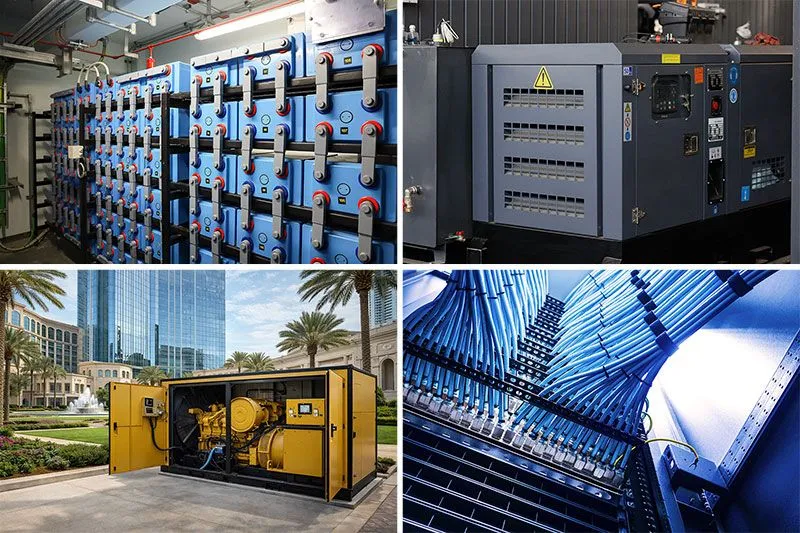 You’ll find them behind the scenes—quietly supporting the infrastructure we rely on every day. Data centers processing massive volumes of information. Hospitals running life-saving equipment. Military operations coordinating in real time. Power systems that must respond instantly, without hesitation. These are mission critical environments. And in these environments, reliability isn’t a performance metric—it’s the baseline. Zero downtime. Zero margin for error. 24/7/365 operation under any condition.
What’s changing today is not the importance of these systems—but the scale and complexity at which they operate. Power generation, long considered a mature and stable industry, is entering a period of rapid transformation. Demand is accelerating, driven by the expansion of AI infrastructure, electrification across industries, and a renewed focus on domestic manufacturing. At the same time, facilities are being asked to transition toward cleaner, more sustainable energy models without compromising reliability.
It’s a difficult balance—and one that is putting new pressure on every component within the system.
The role of thermal management in mission critical applications
Temperature control rarely gets the spotlight, but in mission critical power systems, it plays a decisive role. A battery operating outside its optimal range. Condensation forming inside a switchgear enclosure. A standby generator that struggles to start in extreme cold. These aren’t edge cases—they’re real risks that can cascade into system-wide failures. The difference between uptime and outage often comes down to maintaining the right temperature, in the right place, at the right time. That’s where TUTCO Farnam operates.
Across the power generation landscape, Farnam’s heating and control solutions are designed to quietly solve these challenges. In standby generator systems, process air heaters and flexible heating elements help ensure immediate cold-start reliability by maintaining fuel systems, engine components, and intake air within precise operating ranges. When backup power is needed, there is no time for warm-up delays.
In battery energy storage systems and UPS infrastructure, the challenge shifts. Lithium-ion batteries demand tight thermal control—too cold, and performance drops; too hot, and the risk escalates. Farnam’s flexible surface heaters provide uniform, controlled heating across complex battery geometries, helping stabilize performance and extend system life.
Nowhere is the need for heat more evident than in data centers.
Over 800 data centers, including 650 hyperscale data centers are under construction globally, with a total of 30,000 due to be built by 2035. As demand for computing power surges, data centers are rapidly scaling their infrastructure, integrating microgrids, on-site generation, and advanced energy storage. In these environments, even a brief thermal excursion can result in costly downtime. Maintaining stable conditions inside electrical enclosures, switchgear, and power distribution systems is critical—and Farnam’s enclosure heaters and control systems play a key role in making that possible.
At the same time, the broader shift toward electrification is reshaping how power is generated and managed. Industrial facilities are moving away from combustion-based systems in favor of electric process heating solutions that offer greater control and support decarbonization goals. Farnam’s process air heaters and Flow Torch™ technologies are helping enable that transition—delivering efficient, responsive heat where it’s needed most.
Emerging technologies are adding new layers of complexity. Hydrogen fuel cells, for example, require precise gas preheating and temperature control to operate efficiently. These are not off-the-shelf challenges. They demand engineered solutions grounded in deep thermal expertise—something Farnam has built its reputation on.
Mission critical environments
Mission critical power systems don’t always operate in controlled settings. They’re deployed in remote locations, exposed to harsh weather, temperature swings, and moisture. In these conditions, condensation and cold are persistent threats to electrical infrastructure. Farnam’s integrated thermal systems—combining heaters, controls, and protective components—are designed to safeguard sensitive equipment and maintain stability where failure simply isn’t an option. Behind all of this is a broader shift in how power generation systems are designed and built.
OEMs are under pressure to innovate faster, scale production, and meet increasingly complex performance requirements. They need partners who can move seamlessly from prototype to full-scale manufacturing while maintaining precision and reliability. Farnam’s ability to deliver custom-engineered solutions at scale makes it a natural fit in this evolving landscape.
The intersection of mission critical systems and power generation is no longer a niche space. It is one of the fastest-growing sectors in the global economy—defined by rising demand, technological change, and uncompromising expectations. And while much of the focus is on power itself—how it’s generated, stored, and distributed—the systems that support it are just as important.
Because in mission critical environments, success is measured by what doesn’t happen. No failures. No interruptions. No surprises. Just systems that perform—exactly as they’re designed to—every single time.
ENGINEERING INSIGHTS
Control Panels Aren't Scary
by Francisco Herrera, TUTCO Farnam Engineer
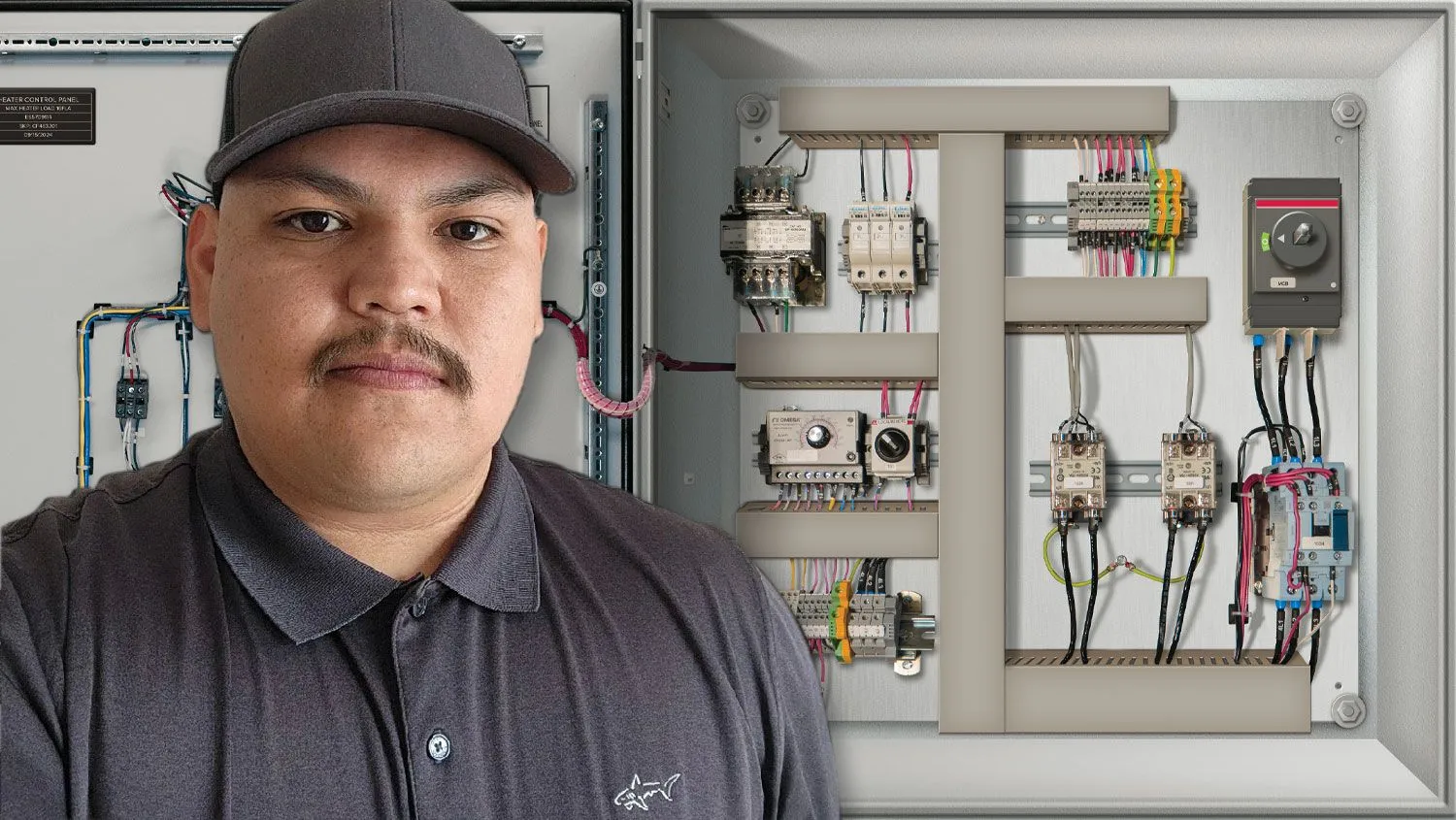
![Francisco Herrera]() When it comes to industrial control panels, I’ve noticed customers tend to fall into one of two camps. They’re either intimidated by controls—or they oversimplify them. On one side, you have teams that see a control panel as overly complex, something difficult to define or even harder to implement. On the other, you have customers who assume, “It’s just a box with some components—I’ll build it myself.” My response is usually the same: Do you really have the time for that?
When it comes to industrial control panels, I’ve noticed customers tend to fall into one of two camps. They’re either intimidated by controls—or they oversimplify them. On one side, you have teams that see a control panel as overly complex, something difficult to define or even harder to implement. On the other, you have customers who assume, “It’s just a box with some components—I’ll build it myself.” My response is usually the same: Do you really have the time for that?
 When it comes to industrial control panels, I’ve noticed customers tend to fall into one of two camps. They’re either intimidated by controls—or they oversimplify them. On one side, you have teams that see a control panel as overly complex, something difficult to define or even harder to implement. On the other, you have customers who assume, “It’s just a box with some components—I’ll build it myself.” My response is usually the same: Do you really have the time for that?
In today’s manufacturing environment, most teams don’t. Everyone is stretched thin. The real challenge isn’t just building a panel—it’s getting a system up and running quickly, reliably, and correctly the first time. That’s why I always start with three simple questions: Where is the panel going to live? What do you want it to control? And what does it need to communicate with?
It sounds basic, but those three questions drive nearly every design decision that follows.
But in high-volume production environments, the process becomes far more technical.
Where the Panel Lives Matters More Than You Think
Let’s start with “where.” This is one of the most overlooked—and most important—factors in control panel design. Is the panel going indoors or outdoors? Will it be exposed to humidity, washdowns, or temperature swings? These aren’t small details. They directly impact component selection, enclosure design, and ultimately cost.
An outdoor-rated panel, for example, requires more than just a different enclosure. You may need environmental sealing, upgraded materials, and even internal climate control. If a panel is installed in a hot environment—say, a facility in Australia—you might need active cooling like an air conditioning unit. In colder regions, such as Alaska, you may need heating elements or at least controlled ventilation. And here’s something people often forget: “Indoor” doesn’t mean climate-controlled.
We’ve seen facilities where temperatures swing from the low 30s in winter to over 100 degrees in summer—all indoors. Those fluctuations can shorten the life of components significantly. Most electrical components are designed to operate within a specific temperature range. When you consistently push beyond that range, you’re not just reducing efficiency—you’re accelerating wear. There’s no single “weak link” component when it comes to temperature. It’s the cumulative effect across everything inside the panel. That’s why understanding the environment upfront is critical.
What You Want to Control (Hint: It’s Not Just the Heater)
As a heating solutions company, many customers initially think control panels are just for managing heaters. But in reality, a well-designed panel can control far more than that.
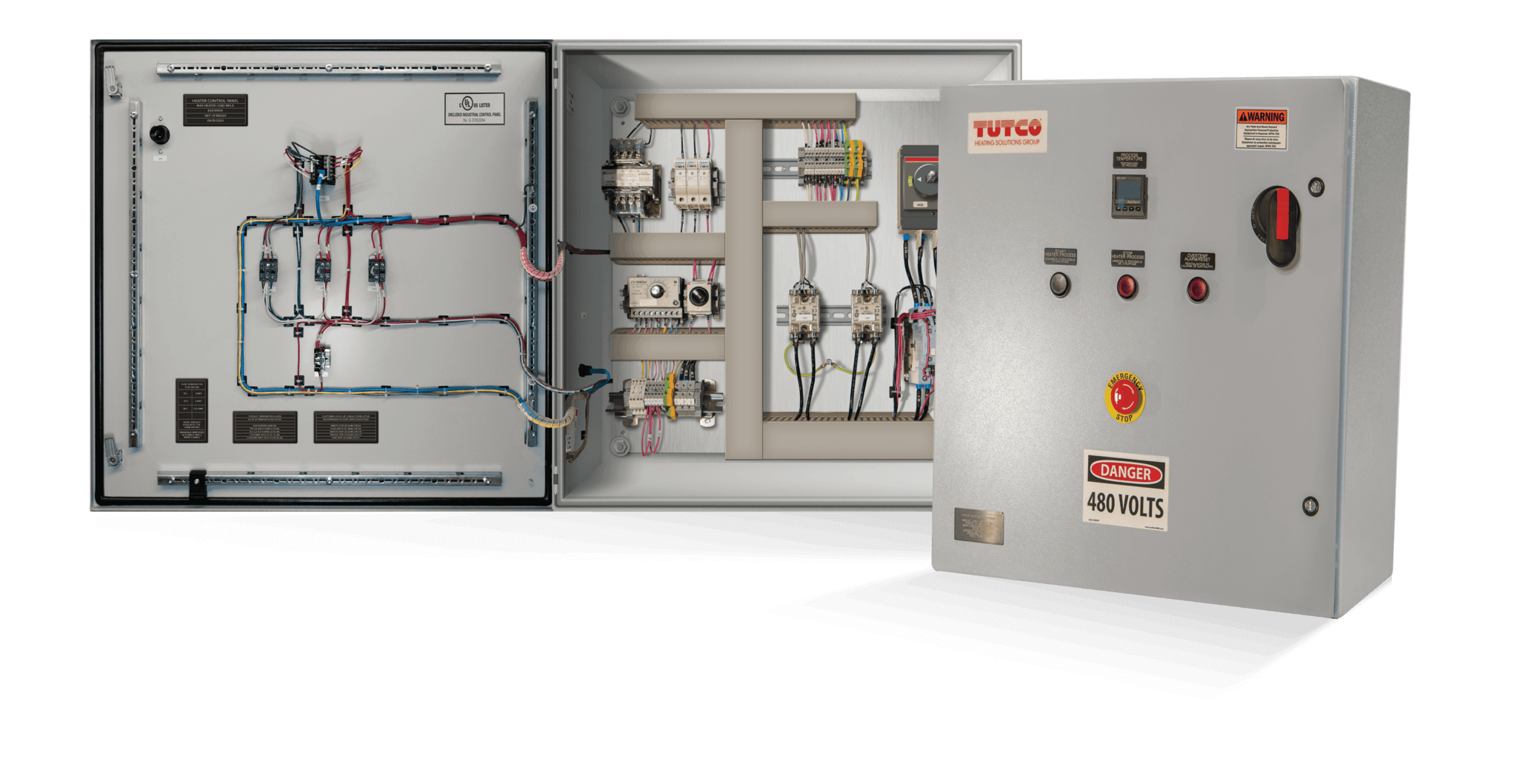
Yes, we control heaters—but we also control blowers, conveyors, safety systems, and even entire process lines. With modern PLCs (programmable logic controllers), the scope is incredibly broad. If it can be measured, monitored, or actuated, there’s a good chance we can control it.
Want to adjust heater output based on conveyor speed? We can do that. Need a system to respond automatically when process conditions change? That’s standard. Looking for multiple operating “recipes” or process parameters? We can pre-program those before the panel even ships.
The real question isn’t what can the panel control? It’s how smart do you want the system to be?
 Communication Is Everything
The third question—what the panel needs to communicate with—is where things get really interesting. Modern industrial systems don’t operate in isolation. Control panels often need to interface with sensors, safety devices, other machines, and sometimes entirely different control systems.
Common examples include:
- Flow switches to confirm airflow before enabling heat
- Light curtains for operator safety
- Proximity sensors and limit switches
- Robotics and conveyor systems
Safety integration is especially critical. For instance, if a light curtain is interrupted, the system can be programmed to shut everything down immediately. That’s not just functionality—that’s protection for people and equipment. From a communication standpoint, we’re often working with different protocols—Modbus, PROFINET, EtherNet/IP, and others. Each has its own capabilities and limitations. Some networks can support hundreds of connected devices, but the exact number depends on the protocol and system architecture.
We’ve even worked on projects where different PLC brands—like Siemens and Allen-Bradley—needed to communicate with each other. That takes additional engineering, but it’s absolutely achievable. At the end of the day, most modern components are designed to “talk.” Our job is to make sure they’re all speaking the same language.
Power, Scale, and Flexibility
Another common question is: How much power can a control panel handle? The answer is simple: The only real limitation is what the customer can supply.
We’ve built panels ranging from 30 amps all the way up to 3,000 amps. The design scales based on the application. Whether it’s a small system or a large industrial process, the approach is the same—understand the requirements and engineer the solution accordingly.
Longevity and Future-Proofing
Customers also ask about lifespan. How long will a control panel last? The truth is, there’s no fixed expiration date. Control panels don’t have a “shelf life.” If you walk through an industrial facility today, you’ll still find panels from the 1950s and 1970s that are operating just fine. What does impact longevity is environment, usage, and component obsolescence.
Over time, manufacturers discontinue parts. Usually, the next generation of components are backward compatible—but that doesn’t last forever. After several generations, compatibility can become an issue. That’s why future-proofing matters. If you know you’ll expand your system down the line—adding new lines, new equipment, or new capabilities—we can design the panel with that in mind from the start.
Support, Startup, and Simplicity
At TUTCO Farnam, we aim to make implementation as straightforward as possible. We can ship panels fully assembled, tested, and pre-programmed—ready to run. In many cases, startup doesn’t require on-site support. A qualified local electrician can handle installation, and commissioning can often be done remotely. Of course, if a project requires it, we can provide on-site assistance. But increasingly, technology allows us to support customers virtually with the same level of effectiveness.
And if something isn’t working as expected? Call us. I’ve seen situations where a customer struggled for months with an issue that could have been resolved in minutes. Often, it’s something simple—like a process parameter that was changed unintentionally. The key is communication. Don’t wait.
The Bottom Line
Industrial control panels don’t have to be intimidating—and they definitely shouldn’t be oversimplified. When you take the time to answer three core questions—where, what, and how it communicates—you set the foundation for a system that works reliably, integrates seamlessly, and scales with your operation.
At the end of the day, we’re not here to sell you a control panel. We’re here to build your control panel—designed for your environment, your process, and your future.
Read more on mission critical applications here.
Share Details & QuoteTHINKING OUTSIDE THE BOX
The One-Stop Product: Thermal Process Controllers
by Jeff Elrod
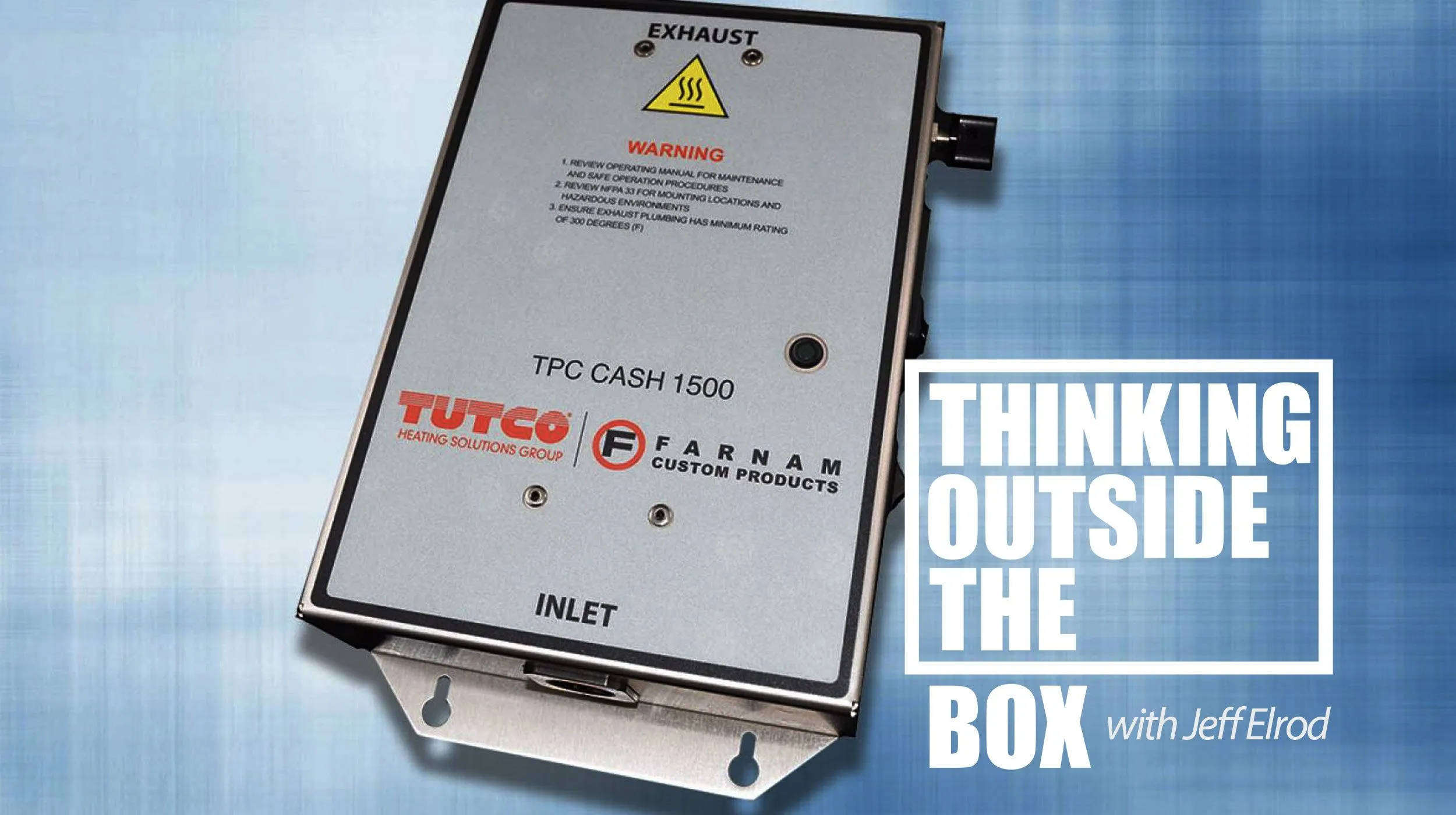
If you’ve been following this series, you’ve probably noticed that we often highlight conductive or forced-air process heating solutions that fall outside the typical approach. These are usually designed to solve specific—and often unique—challenges. This time, however, it might be more appropriate to talk about thinking inside the box—because in this case, everything you need is quite literally contained within one system.
If you’re not already familiar with this product line, let me introduce the Tutco Farnam Custom Products line of Temperature Process Controllers. You can explore the full offering here: https://farnam-custom.com/complete-thermal-systems
This is a true one stop solution. Inside a single control box, you’ll find not only the controls, but also a cool-touch heater and an integrated flow switch. Installation is straightforward—just mount the unit, connect power, and supply compressed air in and out. That’s it.
For simpler applications where you need a quick, cost-effective solution without building a complex system, this product line is an excellent fit. The TPC Cash 1500 is ideal for space-constrained setups. The standout of the line, however, is the TPC1500, which offers full PID control along with advanced features to ensure safe, accurate, and reliable temperature regulation. One key feature is the integrated flow switch, which helps extend heater life by automatically shutting down the system if airflow is interrupted.
From a performance standpoint, the system operates at up to 120 PSI with airflow between 5–70 SCFM. It delivers 1500 watts of power and can run on 120 or 240 volts (producing 1125 watts at 208V when set to 240V). The exhaust temperature is adjustable from 65°F up to 500°F (260°C), and the unit uses ½” male NPT fittings for compressed air connections.
These systems are used across a wide range of applications, including automotive painting, adhesive activation, air drying, solder removal, heat staking, sterilization, web and ink drying, plastic curing, metallization, heat shrinking, and hopper drying. That said, the possibilities don’t stop there. When you think creatively, this “box” can solve many challenges that require a reliable forced hot air solution.
On a personal note, this product is especially meaningful to me. My late father worked as an automotive body technician and always wished for a way to heat compressed air during painting to improve paint flow. If we had known about a system like this back then, we could have made it happen. At the end of the day, we’re here to help you “think outside the box”—even when the best solution happens to be everything inside one.
FEATURE APPLICATION
Crossflow Blower Heaters for Industrial Drying
A smarter way to dry, dehumidify, and move beyond gas
Moisture issues in industrial environments often start small—barely noticeable inconsistencies in drying, slight condensation inside a cabinet, or coatings that don’t quite cure as expected. But over time, those small issues can lead to product defects, equipment failures, and costly downtime. For manufacturers working in electronics and enclosure systems, controlling heat and humidity isn’t just important—it’s critical to maintaining quality and reliability.
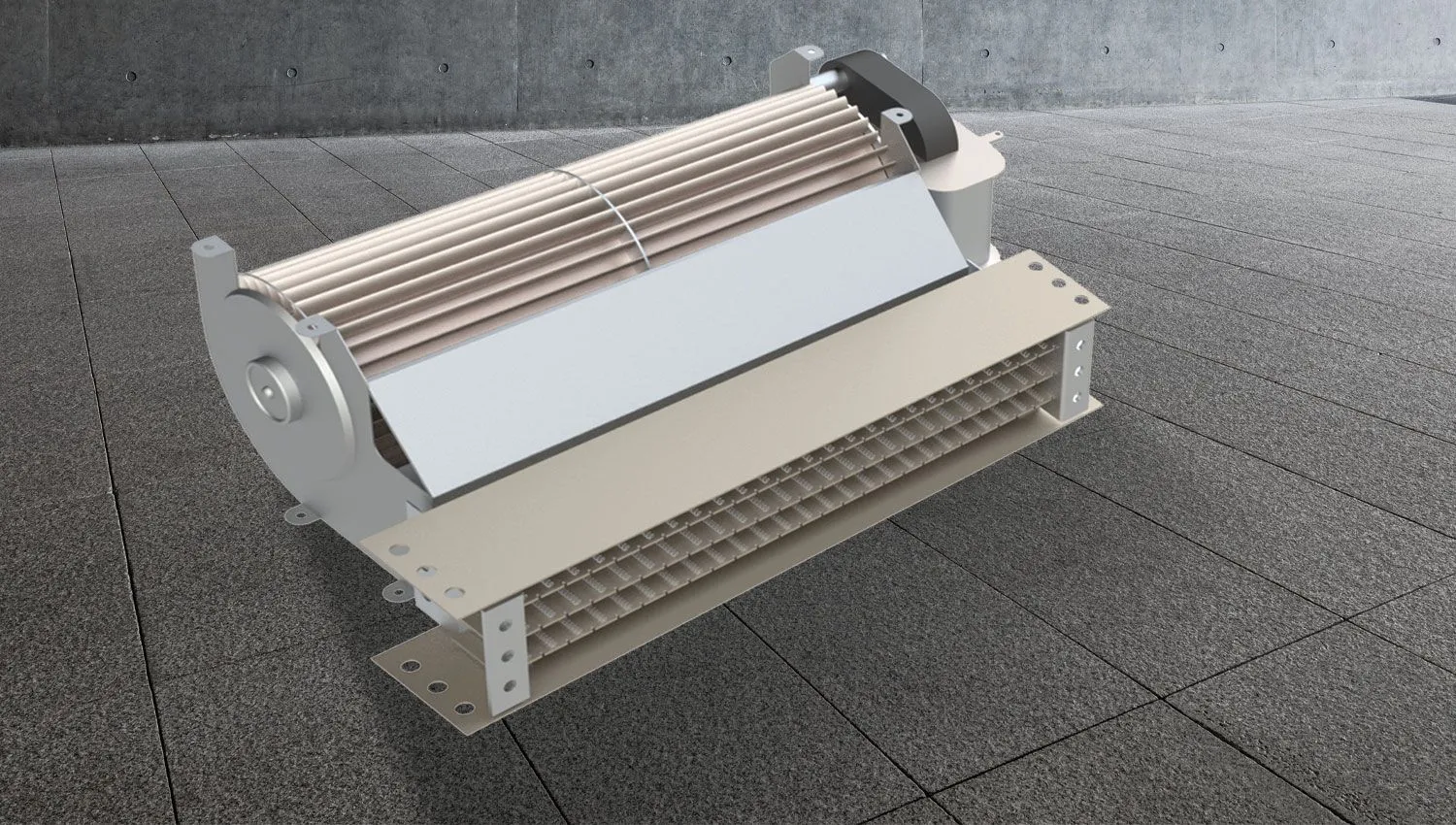
Crossflow blower heaters offer a fundamentally different approach to solving these challenges. Instead of producing concentrated streams of hot air like traditional axial or point-source heaters, they generate a wide, uniform curtain of airflow. This even distribution of heat allows for consistent drying across the full width of a conveyor or enclosure opening, eliminating hotspots and reducing the risk of damage to sensitive components. The airflow is smooth and low-turbulence, making it especially well-suited for delicate assemblies, coatings, and connectors that can be disrupted by more aggressive heating methods.
Because these systems are electric, they also deliver clean heat without combustion byproducts. That’s a major advantage in electronics manufacturing, where contamination from gas-fired systems is not acceptable. At the same time, electric heating provides precise control, allowing operators to maintain tight temperature ranges that protect adhesives, plastics, and coatings while still achieving effective moisture removal.
TUTCO-Farnam’s crossflow blower heaters are designed with real-world integration in mind. Rather than requiring complex ductwork or mounting systems, the heaters attach directly to the blower outlet, simplifying installation and reducing pressure loss. Standard sizes make it easy to match the heater to the application, while customizable options—such as dual wattage, voltage configurations, and built-in thermal protection—allow engineers to tailor performance to specific process requirements. The result is a modular, drop-in solution that works equally well for new equipment and retrofits.
In enclosure and cabinet applications, crossflow heaters become even more powerful when paired with simple controls like thermostats and hygrostats. These systems can automatically respond to rising humidity levels, activating heat only when needed to prevent condensation and corrosion. This targeted approach not only protects electrical components but also reduces energy consumption by avoiding unnecessary runtime.
The shift toward electric heating is also being driven by broader operational and economic considerations. Low-to-mid temperature processes like drying and dehumidification are among the most practical and impactful areas for electrification. Manufacturers that make the switch are seeing gains not only in energy efficiency, but also in product quality and system reliability. Better moisture control leads directly to fewer defects, more consistent performance, and longer equipment life.
In day-to-day applications, the benefits are easy to see. On a conveyor line, a crossflow heater can quickly and evenly dry PCBs or wire harnesses without disturbing parts. In coating processes, it provides gentle preheating that improves adhesion and finish quality. In control cabinets, it helps maintain stable internal conditions, preventing the condensation that can lead to shorts or corrosion. Across all of these use cases, the common advantage is uniform, controlled heat delivered exactly where it’s needed.
For facilities still relying on gas-fired or inconsistent heating methods, crossflow blower heaters provide a clear and practical path forward. They simplify system design, improve process control, and support broader goals around efficiency and electrification—all without requiring a complete redesign of existing equipment.
As manufacturers continue to look for ways to improve uptime, reduce energy use, and maintain product quality, crossflow blower heaters are proving to be more than just an alternative to traditional systems. They’re a smarter, more precise way to manage heat and moisture in modern industrial processes.
FEATURE VIDEO
Wiring a TUTCO SureHeat Max Air Heater
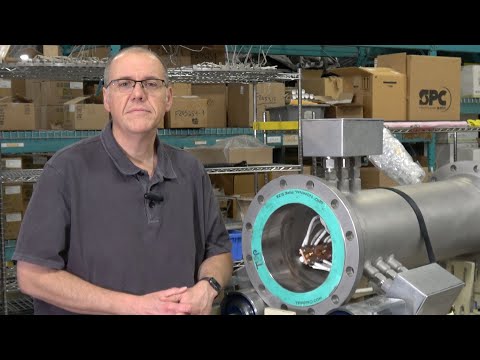
In this instructional video, TUTCO SureHeat walks through the proper wiring process for the SureHeat Max air heater—one of the company’s most versatile and widely used inline heating solutions. Covering models ranging from 6 to 36 kW and supporting both single-phase (240V) and three-phase (up to 480V) configurations, this step-by-step overview demonstrates how to safely and correctly wire your heater for optimal performance. Viewers will learn how to access key components, including the S1 and S2 thermocouples, properly route power connections, and apply correct torque specifications during installation.
The video also highlights important best practices—such as protecting delicate thermocouple wiring, securing the unit with proper mounting options, and ensuring all connections are tightened to recommended torque levels. Whether you’re installing a new unit or verifying an existing setup, this guide provides the clarity and confidence needed to get your SureHeat Max heater up and running efficiently. For additional resources, including quick start and torque guides, viewers are encouraged to visit the TUTCO SureHeat website or contact the team directly for support.